




Three beaches within a short drive of each other can look almost identical in a photograph and still follow three different sets of rules. On one of them, a hired photographer is not allowed to work on the sand at all.
For a session with a professional photographer, the best beaches for photos in Charleston are Folly Beach and Isle of Palms. Both face the open Atlantic, and both allow professional photography under city conditions. Sullivan’s Island, often recommended for its quiet beach, prohibits commercial activity on the beach, photography included, under the town’s beach rules.
Three beaches, side by side
Studio FB USA’s family page names these three islands as its beach settings around Charleston. This table compares them on what decides a photo session; the rules come from each town’s own beach pages.
| Folly Beach | Isle of Palms | Sullivan’s Island | |
|---|---|---|---|
| Hired photographer on the beach | Covered by the city’s guidelines for commercial filming and photo shoots, which favor weekdays and the off-season | Allowed under limited conditions; the photographer needs a city business license | Prohibited: the town bans all commercial activity on the beach, including photography and filming |
| Landmarks for a backdrop | The fishing pier; the county park at the west end; the old Coast Guard property toward the Morris Island Lighthouse at the east end | Open beachfront; the county park at 14th Avenue | Not applicable for a paid session |
| Balloons, glass and plastics | Balloons, glass, plastic and foam not allowed on the beach | Balloons, glass, single-use plastic bags, straws and foam not allowed on the beach | Glass containers, single-use plastic bags, straws and foam not allowed |
| Dogs | Not allowed 10 a.m. to 6 p.m., May 1 to September 30; leashed at other times | Leashed; off-leash only in set early or late hours, which change with the season | Every dog needs a license from Town Hall |
| Large groups | Ask the city about events on public property | A permit for more than 50 people, requested 14 days ahead | Not applicable for a paid session |
Folly Beach: pier, county park and a lighthouse view
Folly gives a session more than one background in a single visit. The pier sits near the middle of the island, and the City of Folly Beach describes the county park at the west end as offering one of the best views of the sunset on the island, with Bird Key, a shorebird rookery, visible from it.
At the east end, beyond a gate the city keeps closed to vehicles, the old Coast Guard property stretches toward the Morris Island Lighthouse.
The city publishes guidelines for commercial filming and photo shoots. They encourage filming between September 15 and March 15, and in the busy months they limit smaller shoots to Monday through Thursday, between 8 a.m.
and 6 p.m., with a business license. Ask your photographer how those guidelines apply to a portrait session on the date you want. The west-end park is a Charleston County park, so check its own rules before planning a paid session there.
Tides, light by spot and the city’s rules for Folly are covered in detail in the Folly Beach photoshoot guide.
Isle of Palms: open sand and a clear rule
Isle of Palms states its position more plainly than most. On its weddings page, the city says professional photography is allowed on the beach under limited conditions and that a paid photographer must hold a City business license. Other businesses, such as catering, are not allowed on the beach.
Isle of Palms also asks for a permit for any gathering of more than 50 people on public property, including the beach and the access paths, filed with the police department at least 14 days ahead. A large extended family plus friends can reach that number faster than expected.
Sullivan’s Island: a beautiful beach, but not for a paid session
Sullivan’s Island turns up on nearly every list of Charleston beaches, and it is easy to see why.
For a session with a hired photographer, though, the town’s beach rules settle the question: all commercial activity is prohibited on the beach, including vendors, photography and filming. The rules also keep all activity out of the dunes and require a town license for every dog.
If Sullivan’s is where your family spends its summers, keep it for your own phone pictures and book the session on Isle of Palms or Folly.
Morning light from the ocean, evening light from the land
These beaches face the open Atlantic to the southeast, so morning light comes from the ocean side and the evening sun goes down on the land side of the island. On July 7, 2026, the U.S. Naval Observatory puts sunrise at Folly Beach at 6:19 a.m. and sunset at 8:31 p.m., Eastern Daylight Time.
That gives two kinds of beach light. Early morning brings low, warm light from the water and fewer people on the sand.
In the evening, the sun sinks toward the houses and dunes, so near sunset much of the beach is in their shade; a spot with a clear western view, like the west end of Folly, keeps the sun in the frame longer.
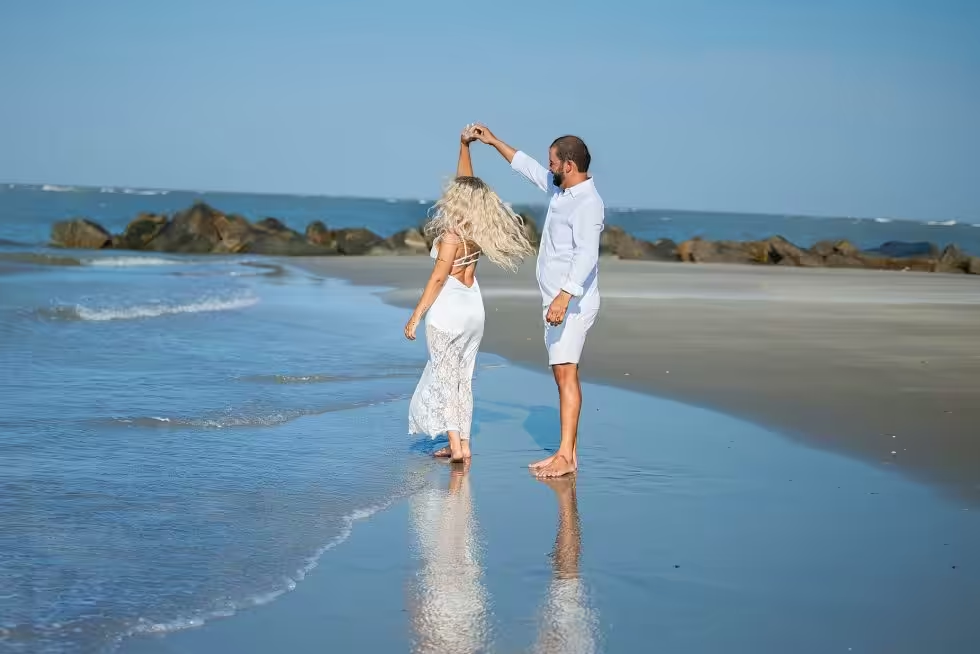
The frame above shows what bright, high sun does on wet sand: strong blue sky, reflections at the water’s edge, and clothes in white that hold their shape. It is a look for couples who want color; for softer skin tones, the first and last hour work better.
The tide decides how much beach you get
Charleston’s coast has two high and two low tides most days, and the difference is large: NOAA’s Charleston station records a mean range of about 5.2 feet between high and low water.
At low tide, the beach is wide and the wet sand reflects the sky; at high tide, some stretches have little dry sand left between the water and the dunes.
The Isle of Palms weddings page advises couples planning a ceremony on the sand to look at the tide table, and the same goes for a portrait session on any of the three islands. Lining up a low or falling tide with the last hour of light is worked through date by date in the Folly guide mentioned above.
Rules that change the props
- Balloons: banned on the beach at Folly and Isle of Palms. A gender reveal or birthday on the sand needs another way to show the color.
- Glass and alcohol: both banned on the beach on all three islands, so a champagne toast after a proposal happens off the sand.
- Dunes and sea oats: protected everywhere. Photos with the dunes behind you are fine; photos standing in them are not. On Folly, being on the dunes off the walkovers is unlawful.
- Light after dark: on Folly, lights that shine on the front beach are not allowed from 10 p.m. to dawn, May through October, to protect sea turtle hatchlings.
- The family dog: check the hours first. On Folly in summer, dogs cannot be on the beach during the middle of the day.
Before you book a beach session: a checklist to print
- Which beach, and does the photographer hold the license or follow the guidelines that town asks for?
- Sunrise or sunset session? Look up the exact time for your date.
- What is the tide at that hour? Low to mid tide gives the most sand.
- Where will you park, and how far is the walk to the spot you want?
- Is the dog coming, and is that hour allowed?
- Any props? Leave balloons and glass at home.
- How many people? Over 50 on Isle of Palms needs a permit two weeks ahead.
- What is the backup if a storm builds or the heat index climbs?
- Clothes chosen for wind and wet hems; the guide to family beach photos: what to wear covers colors and fabrics.
When the studio is the better beach day
A July beach session means an early alarm or a late, humid evening. Studio FB USA’s family page describes the studio in Summerville as the version that survives a July afternoon: nothing depends on the sky, small children stay contained and the background keeps the picture about faces.
If the sand is the point, see how Studio FB USA plans family photos in Charleston, SC, in the studio and on Folly Beach or Isle of Palms, in English, Portuguese or Spanish. Send the date range, the number of people and the beach you have in mind, and ask Studio FB USA about a beach date.