
In one frame from Amanda’s quinceañera, a hand buckles a silver heel onto her foot while a second pair of heels waits on the floor. It takes a few seconds, and it is one of the small rituals that shape the day.
A quinceañera celebrates a girl’s fifteenth birthday. The best-known quinceañera traditions are a Mass or blessing, the court of damas y chambelanes, the grand entrance, the changing of the shoes, the last doll, the crown, the father-daughter waltz, the surprise dance, the toast and the cake. Each one marks a step from childhood toward adult life.
Knowing what each custom means also has a practical side: most of them last a minute or less, often in a dim reception hall. The guide below explains each tradition, says where it usually falls in the day, and notes what helps it photograph well.
The quinceañera traditions at a glance
Not every family keeps every custom, and the order changes from one celebration to the next. This table is a reference for the ones families most often ask the photographer to cover.
| Tradition | Name in Spanish | Where it usually happens | What it marks |
|---|---|---|---|
| Mass or blessing | Misa de acción de gracias | Church, before the party | Thanks for her life and a blessing for the years ahead |
| Signs of faith | Medalla, Biblia, rosario | Church | Faith she carries into adult life |
| Court of honor | Damas y chambelanes | Church and reception | The friends and relatives she chose to stand with her |
| Grand entrance | La entrada | Reception | Her presentation to family and guests |
| Changing of the shoes | El cambio de zapatos | Reception | Flats traded for heels, a step into adulthood |
| Last doll | La última muñeca | Reception | A goodbye to childhood toys |
| Crown or tiara | La coronación | Church or reception | Honor from her parents or godparents |
| Waltz | El vals | Reception | First formal dance, usually with her father |
| Surprise dance | El baile sorpresa | Reception | A rehearsed routine with the court |
| Toast and cake | El brindis y el pastel | Reception | Gratitude to the people who made the day |
The church part: a Mass or a blessing
For Catholic families, the day traditionally starts in church. The United States Conference of Catholic Bishops describes the quinceañera as a celebration of life and of gratitude to God on a young woman’s fifteenth birthday.
U.S. dioceses received an approved rite for it, the Order for the Blessing on the Fifteenth Birthday, in 2007 (USCCB guidance on the quinceañera).
The blessing can happen inside a Mass or outside of one. In the fuller version, the quinceañera enters in procession with her parents and godparents, may read one of the readings, renews the promises of her baptism and receives a special blessing.
Afterward she is presented to the community, and the day continues with a dinner and sometimes a dance. The simpler version is a blessing in church with her parents and godparents, without a Mass.
Parishes may ask the quinceañera and her court to attend a retreat or preparation sessions first, so the church date is worth settling before the hall is booked. Rules about photography during Mass can vary from parish to parish, so ask the priest or the parish office what is allowed and where a photographer may stand.
Padrinos, esponsores and the gifts of faith
Godparents, padrinos and madrinas, are usually part of the procession and the blessing. The bishops’ guidance also mentions esponsores: couples who act as sponsors and may bring forward religious items that are blessed and given to her, such as a medal, a Bible, a rosary or a prayer book.
For the album, these are the people most often left out of the formal portraits, because they are not on the dance floor later. A short list of who sponsored what, handed to the photographer in advance, solves that.
Damas y chambelanes: who stands in the court
The court of honor is made of young women, damas, and young men, chambelanes, chosen by the quinceañera. The USCCB text describes her as often accompanied by fifteen of them. A court can be a few cousins or a large group of friends; dressing it in matching colors is what makes it read as one group in pictures.
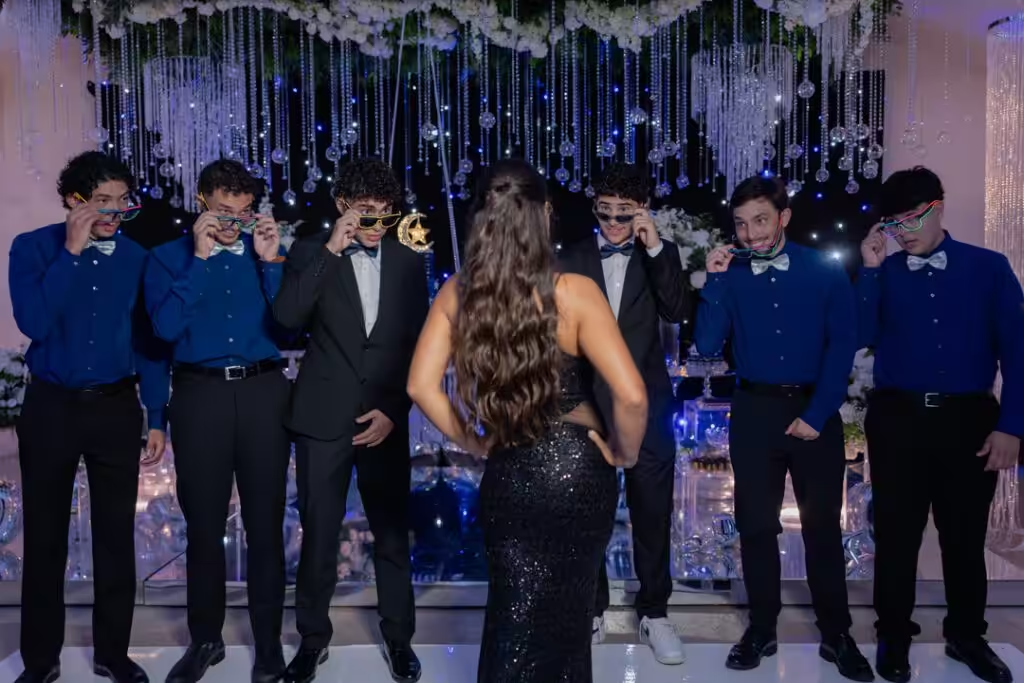
The frame above comes from Amanda’s quinceañera session, published on the Studio FB USA site. Seven young men in matching blue shirts and bow ties strike a pose with sunglasses while she stands with her back to the camera.
Moments like this are short and rehearsed, and the court knows exactly when they come. Telling the photographer the cue in advance is what turns a blur of people into a picture.
The family rituals at the reception
Once the party begins, a run of small ceremonies happens in front of the guests. Studio FB USA’s notes on quinceañera coverage list the ones its team follows through the night: the entrance with the court, the changing of the shoes, the last doll, the waltz with the father, the surprise dance, the toast and the cake.
Each is photographed as it happens, with the family reacting around it.
The changing of the shoes
In this custom the quinceañera arrives in flat shoes and a parent, often her father, replaces them with heels in front of the guests. Families usually explain it as her first step as a young woman rather than a girl.
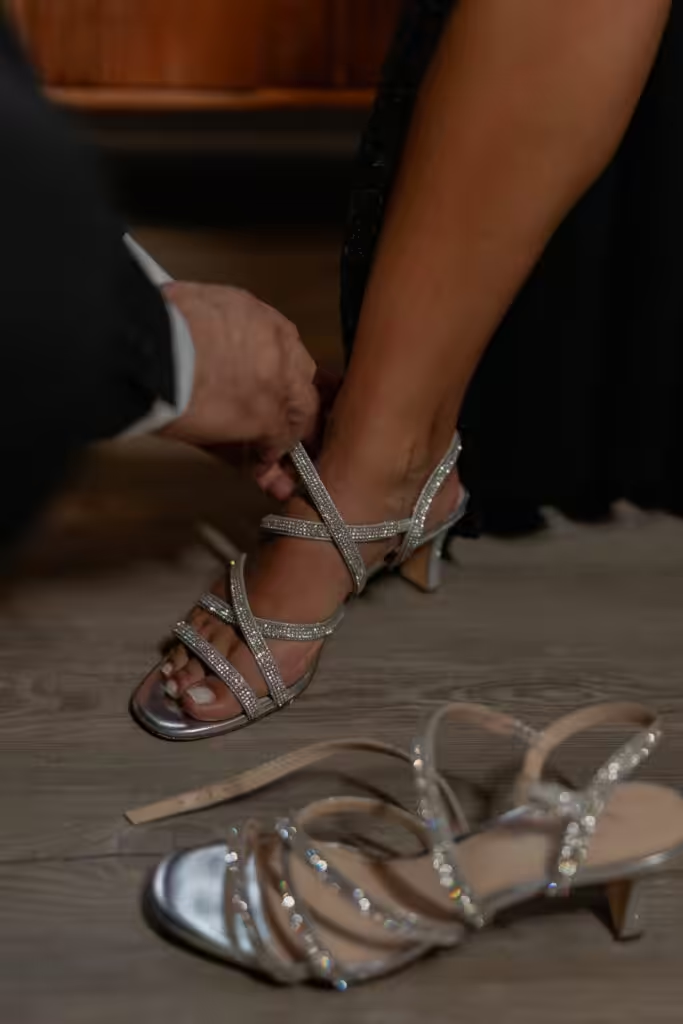
This is the detail described at the top of this guide, and it shows how small the moment is: one strap, one buckle, and the other pair waiting on the floor.
It happens at knee height. A photographer who knows it is coming will be crouched and close before it starts, with a wider frame of the room saved for the reaction.
The last doll and the crown
The last doll, la última muñeca, is handed to the quinceañera as a farewell to childhood toys. In many families it is dressed to match her gown, and some girls later pass it to a younger sister or cousin.
The crown or tiara is placed by her parents or godparents, either in church or at the reception. Both moments take seconds and happen at close range. The relatives giving them should stand a step to one side of her, not in front, so her face stays in the picture.
The waltz and the surprise dance
The waltz, el vals, is usually her first formal dance, most often with her father and then with the court. The surprise dance is a newer custom in many celebrations: a choreographed routine, often in a completely different style, rehearsed for weeks.
Dances are where photographs reach their limit. A still holds one instant of a turn, which is why the studio’s quinceañera page argues for filming the celebration as well, so the music and the choreography survive along with the frames.
The toast and the cake
The toast, el brindis, gives parents, padrinos and sometimes the quinceañera herself a chance to thank the people who made the day possible. The cake follows, often several tiers tall and designed around the theme of the party.
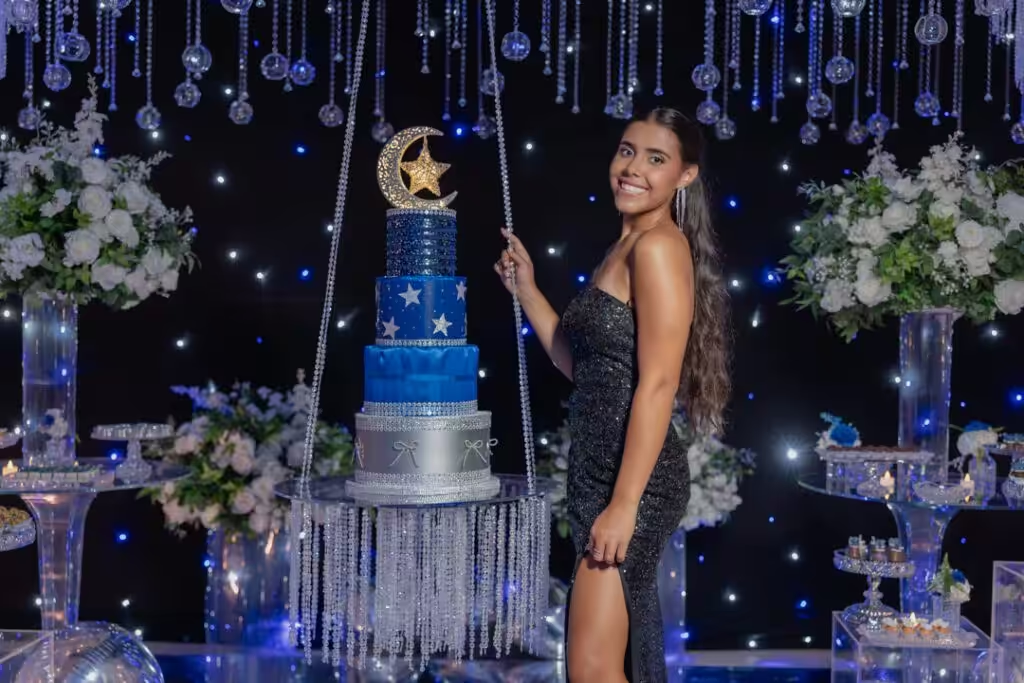
Amanda’s cake, four blue tiers with a crescent moon and a star on top, sat in front of a starry backdrop that carried the theme through the whole room. Photographing the cake and the table before guests arrive, while nothing is cut or moved, is the only way to record the full design.
Portraits in the gown before the big day
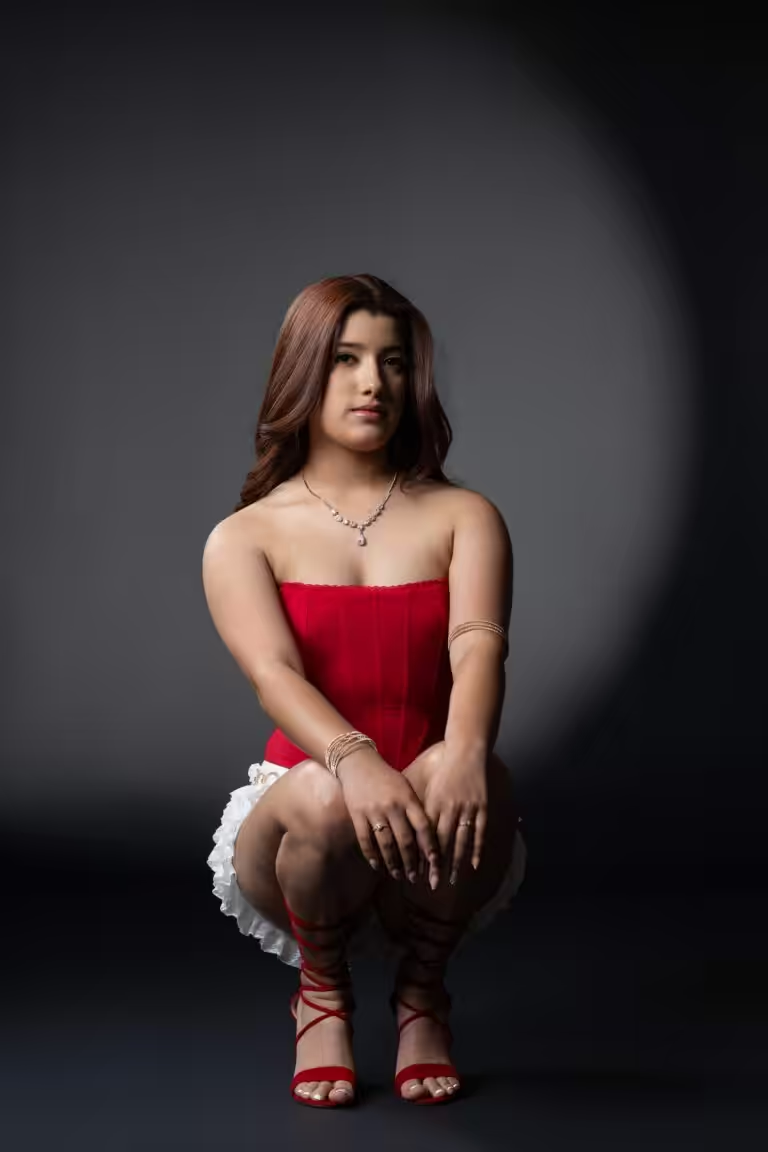
Many families add a portrait session in the gown a few weeks before the celebration, sometimes called a sesión de quince. It is the one part of the quinceañera that does not share the frame with a schedule: she wears the gown, the tiara and the jewelry, and the hour is about her alone.
Those are the images that end up enlarged at the entrance, printed on invitations and framed at home.
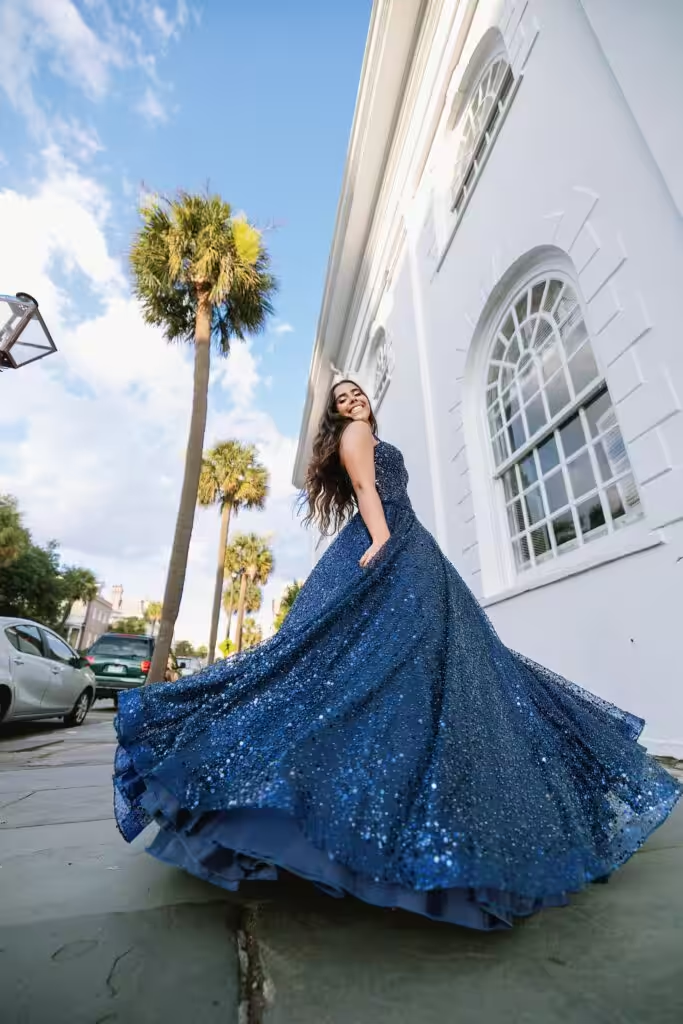
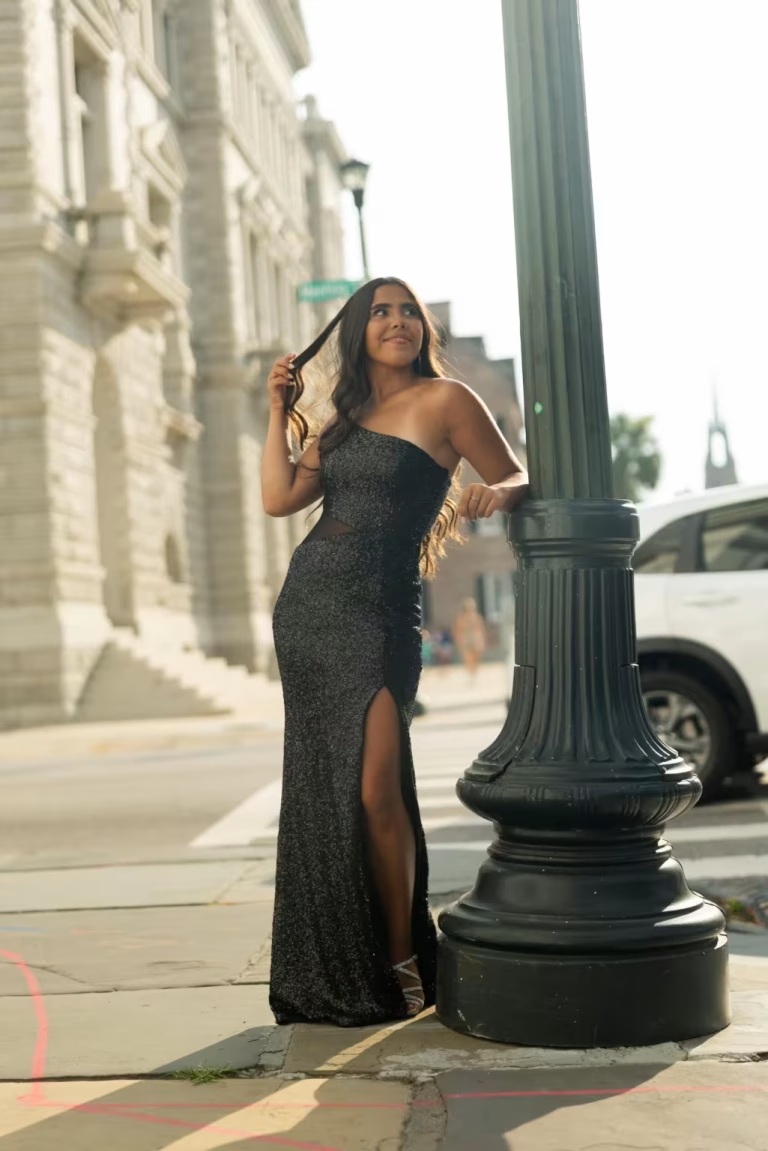
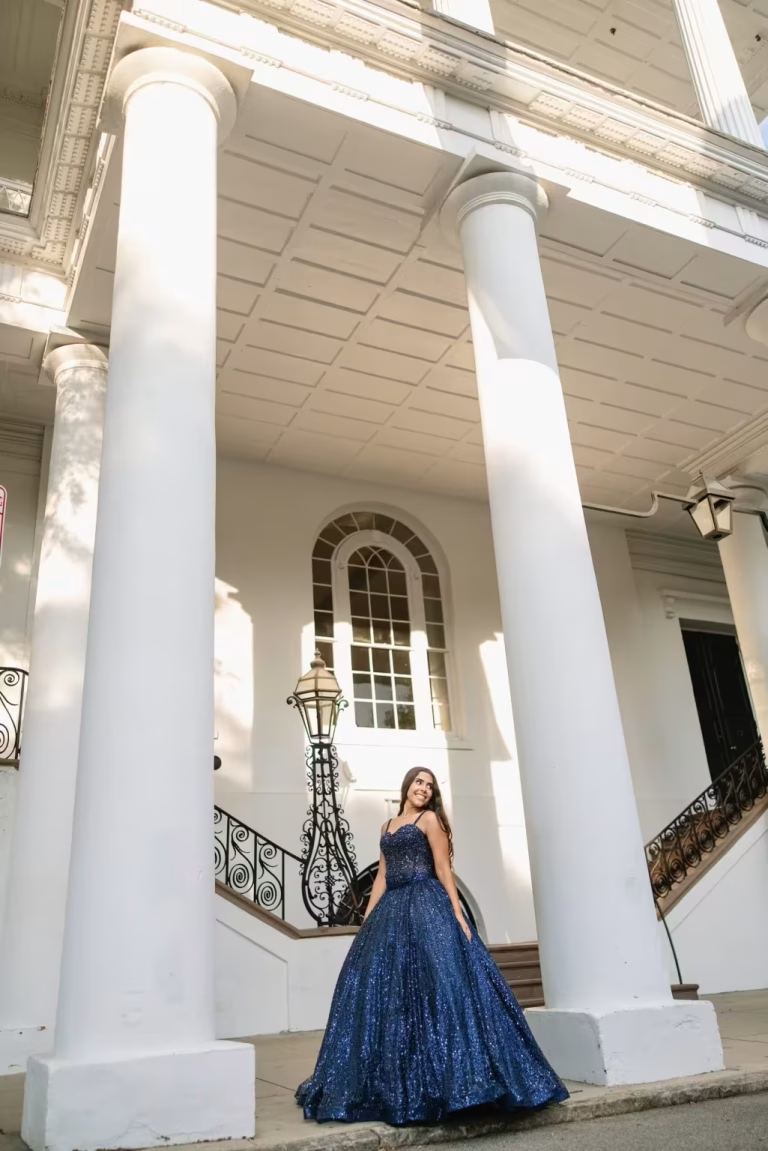
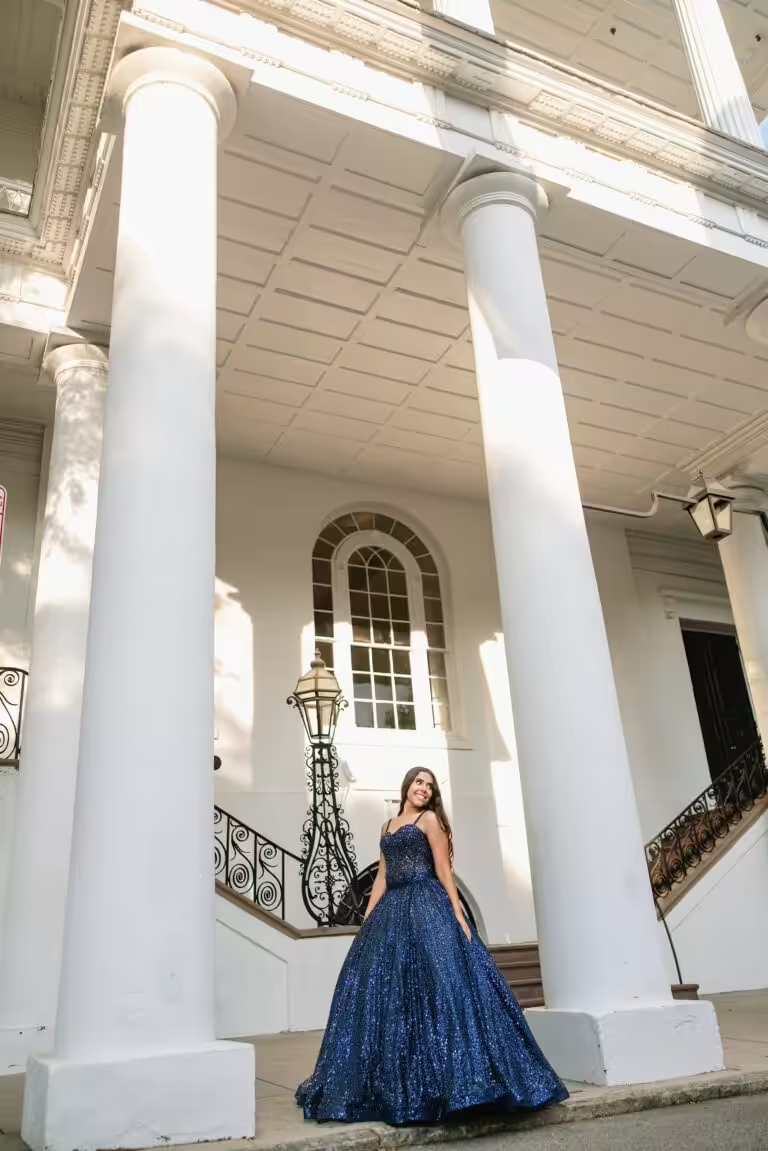
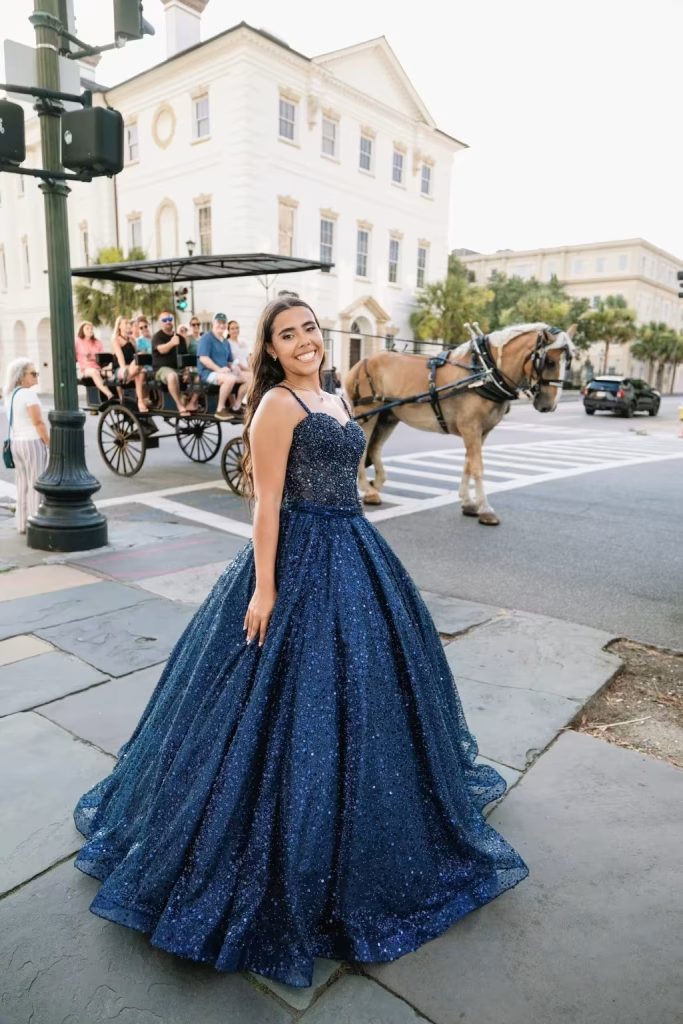
Amanda’s portraits were made on the streets of downtown Charleston in a navy ball gown; the photos from the celebration show a second, fitted black gown for the party.
Families can choose the studio in Summerville, where light and weather are controlled, a location in the Lowcountry, or both in one afternoon.
The timing rule is simple: hold the sitting early enough that prints and any display for the party can be made from it. More on how these sittings are planned is on the page about quinceañera photography in Summerville and Charleston.
How to make sure every tradition reaches the photo album
Most missed moments are not a photographer’s mistake. They happen because the program changed, the hall went dark or nobody said the doll was coming next. A few things, settled before the day, prevent almost all of it:
- Share the program. List the traditions the family is keeping and their order, with who takes part in each one.
- Write the portrait list. Parents, padrinos, esponsores, grandparents, the court, the extended family. Formal groups go faster in a planned window than chased across a party.
- Ask about the light. Reception halls are dark, and the waltz often lands in the dimmest stretch of the night. Lighting should be agreed with the venue and with whoever runs the music, not improvised between songs.
- Check the church. Find out what the parish allows during Mass and whether there is a preparation requirement.
- Use the family’s language. At Studio FB USA the whole day can be planned and directed in Spanish, English or Portuguese, so grandparents and padrinos follow directions without waiting for a translation.
Customs change from country to country and family to family
The bishops’ guidance notes that the celebration is common in Mexico, Central and South America and the Caribbean, and each place adds its own touches. Some families light candles for fifteen important people, some skip the doll, some hold the blessing without a Mass.
In Brazil the same birthday is known as the festa de 15 anos, with customs of its own. None of these choices is more correct than another; what matters is that the people planning the day agree on which moments belong to it.
If you are planning a quinceañera in Summerville, Charleston or anywhere in the Lowcountry, send the date and the venue as soon as they are set, with the traditions you plan to keep. To see how the portraits and the celebration are covered from start to finish, plan your quinceañera photography with Studio FB USA.