



The most common mistake with toddlers in family photos is planning the session as if the child will cooperate on cue: stand in the lineup, look at the camera, say cheese. A one-, two- or three-year-old will not do that for long, and the photos get worse the harder everyone pushes.
The tips that work for family photos with toddlers are simpler. Book the hour after a nap and a meal, take the group frames first while patience lasts, give the toddler something to do instead of a pose to hold, and keep a parent within arm’s reach.
The details change with age and temperament, so the rest of this guide is organized by both.
What a toddler can do at 15 months, 18 months, 2 and 3
Most advice treats “toddler” as one age. It is really three or four very different children. The CDC’s developmental milestones list what most children (75% or more) can do by each age, and those skills map neatly onto what you can ask of them during a session.
| Age | What most children can do (CDC) | What that means in front of the camera |
|---|---|---|
| 15 months | Takes a few steps alone, follows a direction when you combine words with a gesture, claps when excited, hugs a stuffed toy | Ask with your hands as well as your voice (“come here” with open arms). A few steps from one parent to the other is a whole scene. |
| 18 months | Walks without holding on, moves away from you but checks that you are close, points to show you something, follows a one-step direction without gestures | Let them wander a little and keep a parent in sight. One instruction at a time: “bring the flower to Daddy.” |
| 2 years | Runs, kicks a ball, looks at your face to see how to react in a new situation, puts two words together | Your expression sets theirs. If you look relaxed, they read the session as safe. Running toward the camera works now. |
| 3 years | Holds a short back-and-forth conversation, asks who/what/why questions, joins other children in play | They can follow a two-step game and answer silly questions, which is where real laughter comes from. |
Milestones also come from the 15-month, 2-year and 3-year checklists. Every child is on their own schedule; use the row that matches your child, not the birthday.
Book the hour around the nap, not the sunset
Choose the session time by your toddler’s sleep and meals first, and by the light second. A session that cuts into a nap is fighting the child before it starts.
The CDC notes that children between 1 and 2 need 11 to 14 hours of sleep a day, naps included, and that tantrums are more likely when a child is tired or hungry.
This matters more at the end of the year. In mid-December the sun sets around 5:15 p.m. in Charleston, according to the U.S. Naval Observatory, so the soft outdoor light that photographers love lands right on a toddler’s dinner and bath routine.
For many families with a child under three, a late-morning session in the studio, or outdoors in open shade, is the better trade.
Whatever the hour, arrive fed. Our family session notes say it plainly: for younger children, schedule the session after a nap and a meal, not before.
If your toddler runs, clings or melts down
Age sets what is possible; temperament decides the order. Find your child below.
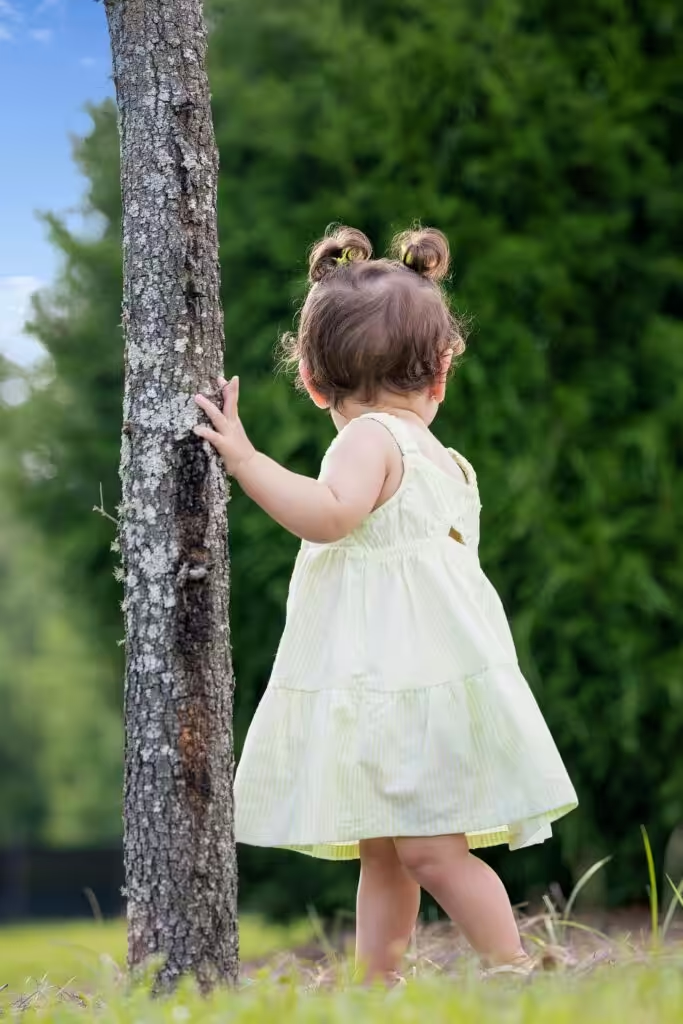
If your toddler is a runner
Do not fight it; use it. Place the parents together, let the child run toward them, and photograph the arrival. A run into a parent’s arms can be repeated as a game, which is more than any pose will get you.
Group frames come first, while everyone is still standing in the same place, and the moving frames come after.
An outdoor setting with space helps a runner. So does a goal: a parent crouched at the end of a path, a ball to kick back, a bench to climb on.
If your toddler clings to you
Start with the child in a parent’s arms and stay there until they relax. Wariness of strangers is a milestone in itself (the CDC lists it at 9 months), and two-year-olds still check a parent’s face to decide how to react to something new.
So the first frames are close, held and quiet, with the photographer keeping a little distance. Holding first also leaves the walking and running frames for later, when the child is ready to be put down.
Avoid passing the child to the photographer or asking them to “go stand over there.” Bring the frame to the child instead.
If your toddler melts down halfway through
Stop, comfort, feed, and wait. A short break costs less than pleading does. The CDC is direct that tantrums at this age are normal and that it is fine to let one run its course and move on. A good session has room for that, and ours runs at the youngest person’s pace by design.
Keep expectations honest. We say it to parents of older siblings at newborn sessions, and it holds for any family session: with a child under four, one or two good frames of them are a success.
If the toddler is the youngest of several children
Sequence matters. Photograph the full group first, give the toddler the most active setups early, and save portraits of the older children for later, when the toddler is snacking or on a parent’s lap. Teenagers can be photographed like adults at any point; the toddler cannot.
Give them a job instead of asking for a smile
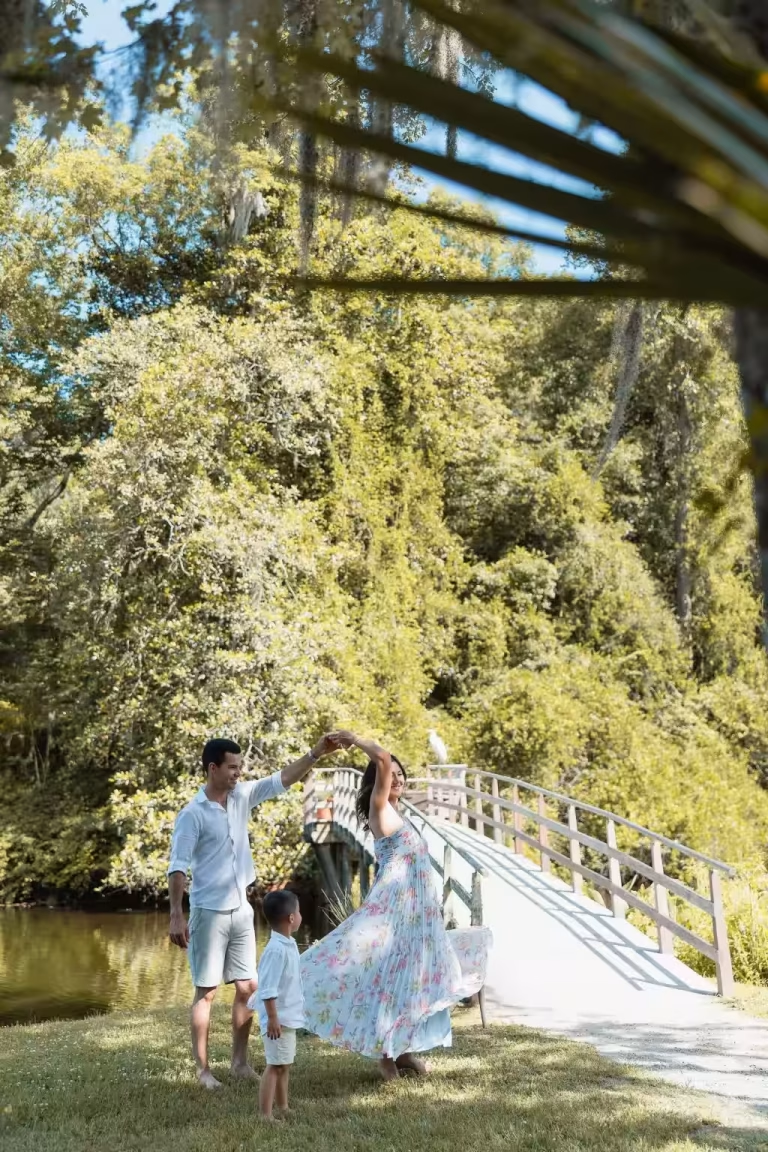
A task produces a better expression than an instruction. Toddlers copy what adults do, so the job often belongs to the parents: spin each other, tickle, whisper a secret, and the child joins in.
- 15–18 months: carry a small toy to a parent, clap along to a song, hug a favorite stuffed animal, point at something you name.
- 2 years: run to a parent, kick a ball back, “help” a parent fix their hair or collar.
- 3 years: two-step games (“jump twice, then hug Mommy”), questions with silly answers (“is Daddy a dinosaur?”).
Music helps, but keep it to sound. Songs with gestures, like “Wheels on the Bus,” are on the CDC’s own list of activities for this age.
The same pages say screen time is not recommended before age two. A video on a phone held next to the lens also pulls the child’s eyes off the people they are supposed to be looking at.
Studio, outdoors or your living room with a toddler
Each setting helps a different child. The studio keeps small children contained and nothing depends on the weather; outdoors gives a runner room; and at home, toddlers behave better on their own floor than anywhere else.
If you go outdoors in Summerville, pick a place that gives a toddler something to look at and point to, like the turtle pond in Azalea Park. A child who is busy pointing at something is a child who is not trying to leave.
Clothes and the bag for a one-, two- or three-year-old
Comfort comes before color. A toddler in a scratchy collar or stiff shoes will show it in every frame, so choose soft fabrics and shoes they already walk well in (or none, on grass or in the studio).
Try the outfit on a week before. Our guide to fall family photo outfits covers fabrics and palettes for the whole family.
Pack the bag together, too. The CDC suggests letting toddlers help with everyday tasks, like putting the snacks in the bag, and a toddler who helped pack it knows the favorite toy is in there.
- A spare outfit for the youngest.
- Snacks that do not stain and are easy to put away, plus water.
- One small favorite toy that fits in a pocket.
- Wipes, and a jacket for the walk back to the car.
What a good toddler gallery looks like
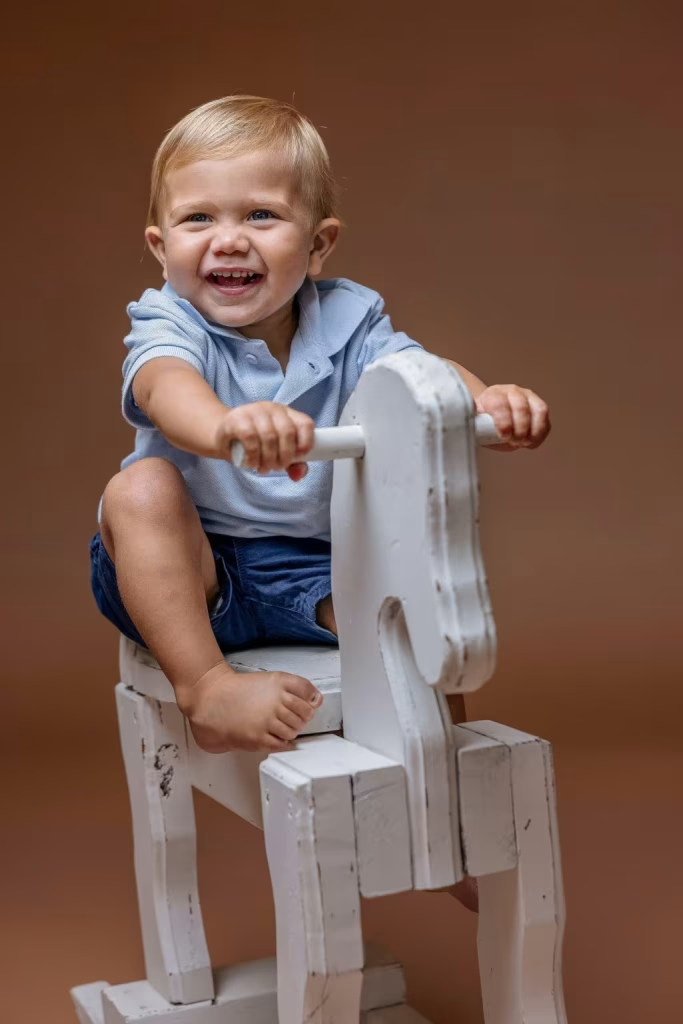
A good gallery with a toddler in it is not twenty frames of a child looking at the lens. It is a few strong group frames taken early, a run of moments that only happen at this age, and the parents’ faces while they watch.
That is what we plan for in our family photos in Summerville and Charleston: the order of the setups, the hour and the pace are built around the youngest person in the frame, and sessions are led by our photographer, Fabio, and directed in English, Portuguese and Spanish.
Tell us your child’s age and nap time when you get in touch, and we will suggest the hour. Plan a family session with Studio FB USA.