

In one frame from Livia’s family session, a father lifts his little girl high over his head against a blue sky while her mother reaches up beside him, both of them laughing. Nobody is looking at the camera, and it is one of the best pictures in the set.
That is the secret behind most family photo poses that work: they give everyone something to do with each other. Start with the whole group close and touching, add a few poses with movement, then break the family into smaller combinations. The reference below explains each pose, what it fixes and who it suits.
The order poses happen in a directed session
The order matters as much as the poses. At Studio FB USA the full group comes first, while clothes are still neat and the smallest family members still have patience to spend. After that the session narrows step by step: the couple, then every parent-and-child pair, then brothers and sisters, then grandparents with the grandkids.
The camera keeps working between setups, too. A giggle, a sibling’s whisper or a child scrambling up a parent uninvited is often the frame a family ends up printing. You can see the layering in Samara’s family session, which moves from a standing group to the floor to a sofa.
The pace belongs to the youngest person in the room. If a toddler is done, the group shots are already in the bag.
Poses for the whole group
The close stand
Everyone stands touching, shoulders overlapping, with the tallest people at the back or in the center and the smallest in front or in someone’s arms. Weight goes on the back foot and bodies angle slightly toward the middle.
It closes the gaps that make a group look like strangers waiting in line, and it is the frame grandparents ask for on the wall. Every family should have one.
The floor layer
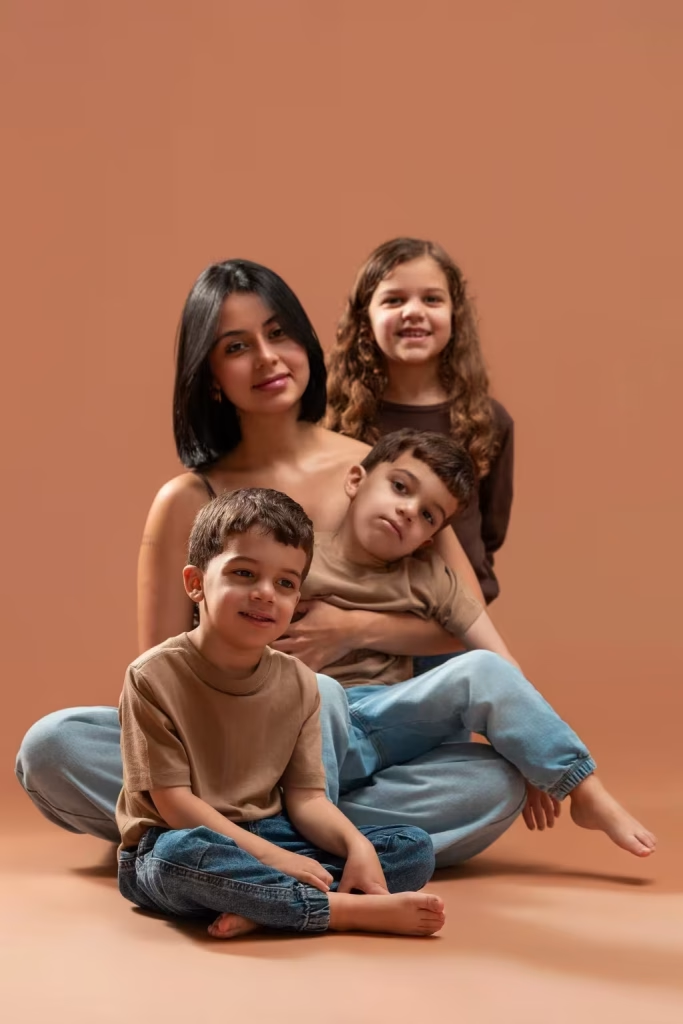
One parent sits on the floor, a child settles into their lap or leans against them, and everyone else kneels or sits around them at different heights. Height differences stop mattering, and a toddler who refuses to stand has somewhere to be.
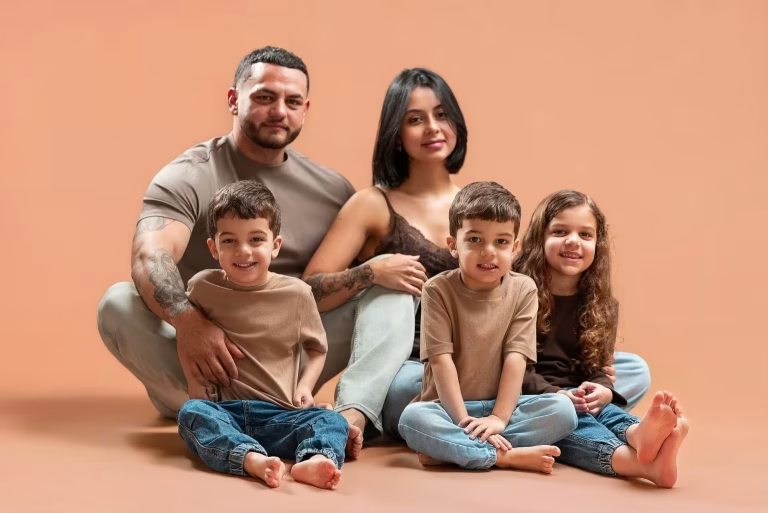
In this page’s featured photo, from Samara’s session, the mother sits on a warm terracotta studio floor with one son sitting in front of her, another stretched across her lap and her daughter close behind her shoulder. Four heads at four different heights, all within a hand’s reach of each other.
The sofa stack
One adult sits on the floor in front of a sofa, the children sit or kneel on the cushions behind, and the other parent leans in from the back. It turns a living room or a studio set into three levels of faces without anyone standing stiffly.

In this frame from the same session, the father sits on the rug with an elbow on his knee, the mother and two sons settle on the sofa, and the daughter leans in from behind. The lamp and the window make it look like a real living room rather than a set.
The walk
The family holds hands and walks slowly toward the camera, or away from it, talking to each other, and a child is free to run a few steps ahead. People stop posing once they are moving, which is the whole point. It needs a path or an open lawn.
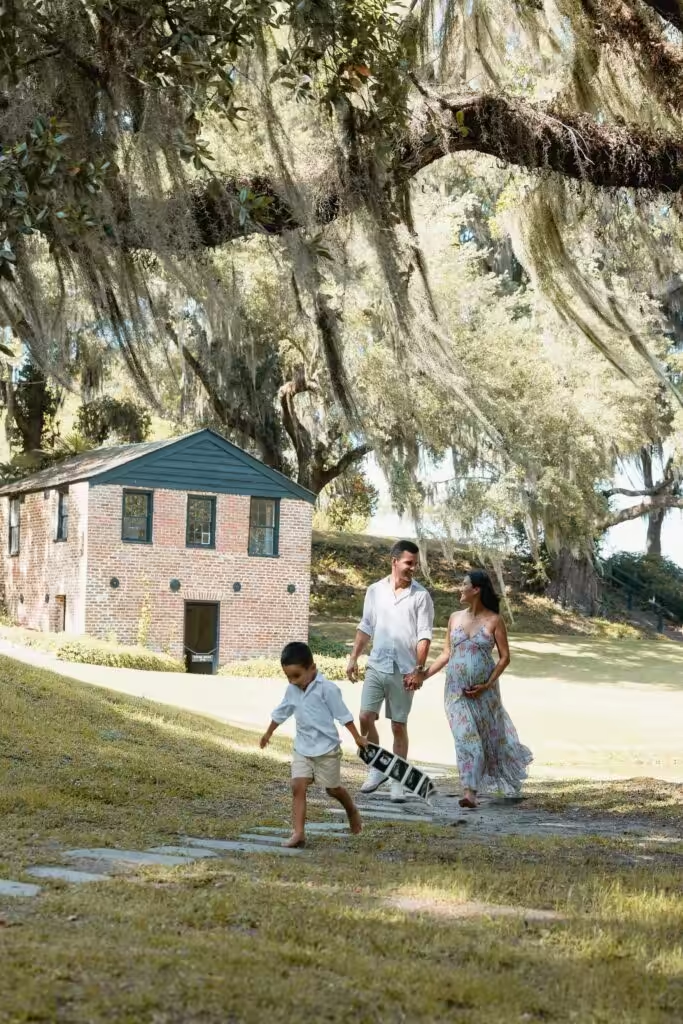
Under the live oaks, the walk works because the moss and the light do the decorating. In this frame the parents hold hands while their son runs ahead with a sign, and nobody had to be told where to look.
Poses that bring out movement
The lift
A parent lifts a small child up and brings them back down a few times while the other parent stays close, and the photographer shoots the whole arc. The polite smile tends to give way to a real laugh after a lift or two. Keep it to children light enough to lift safely, outdoors or under a high ceiling.
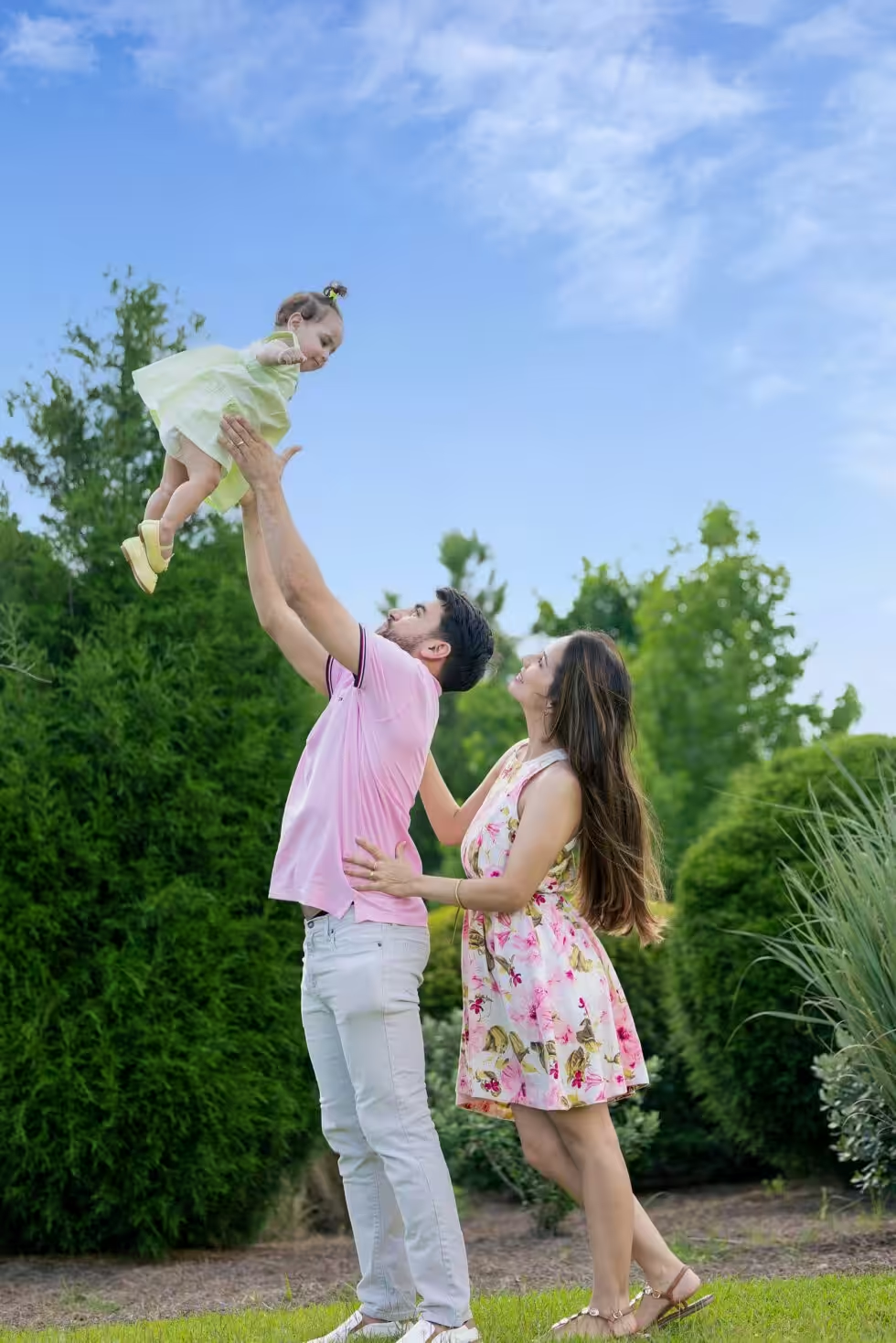
This is the frame described in the opening paragraph. The mother’s raised arm matters as much as the lift: it ties her into the picture, so it reads as a family moment instead of a father-and-daughter shot with someone standing nearby.
The twirl
One person spins another by the hand: a parent with a child, or one parent with the other, while the rest of the family watches or joins in. A long dress stops hanging flat, and an adult who feels silly has something to laugh at.
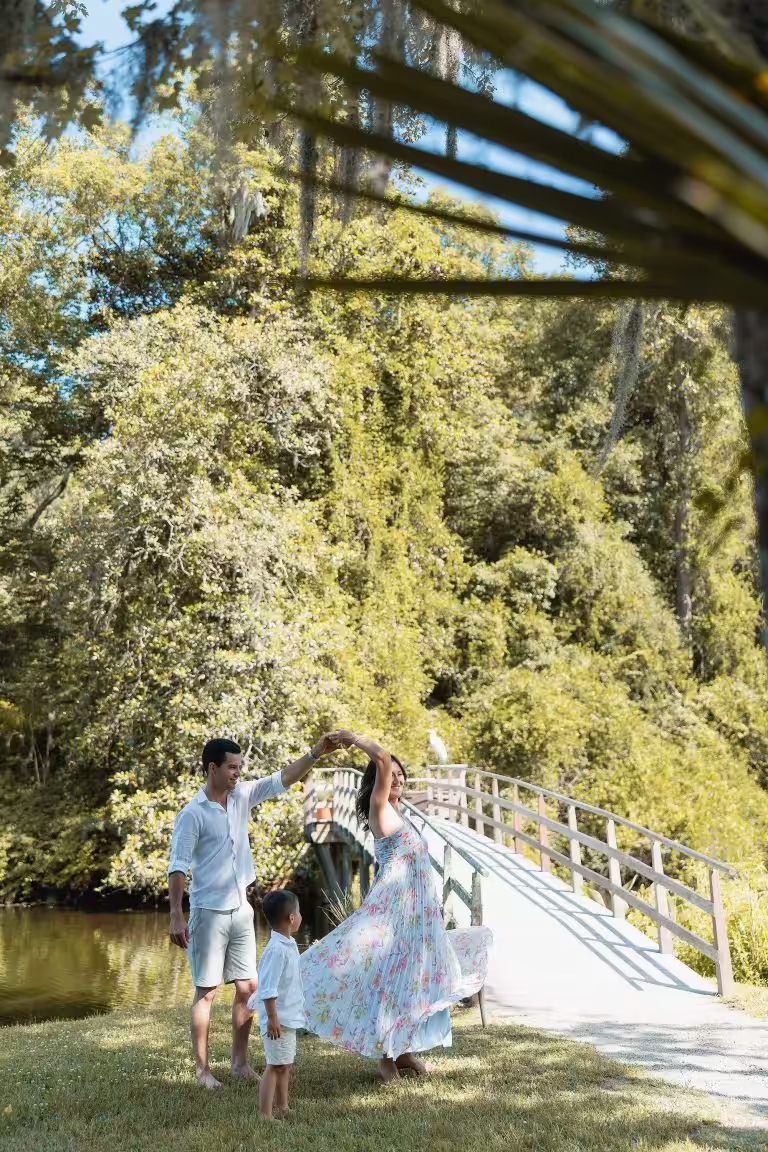
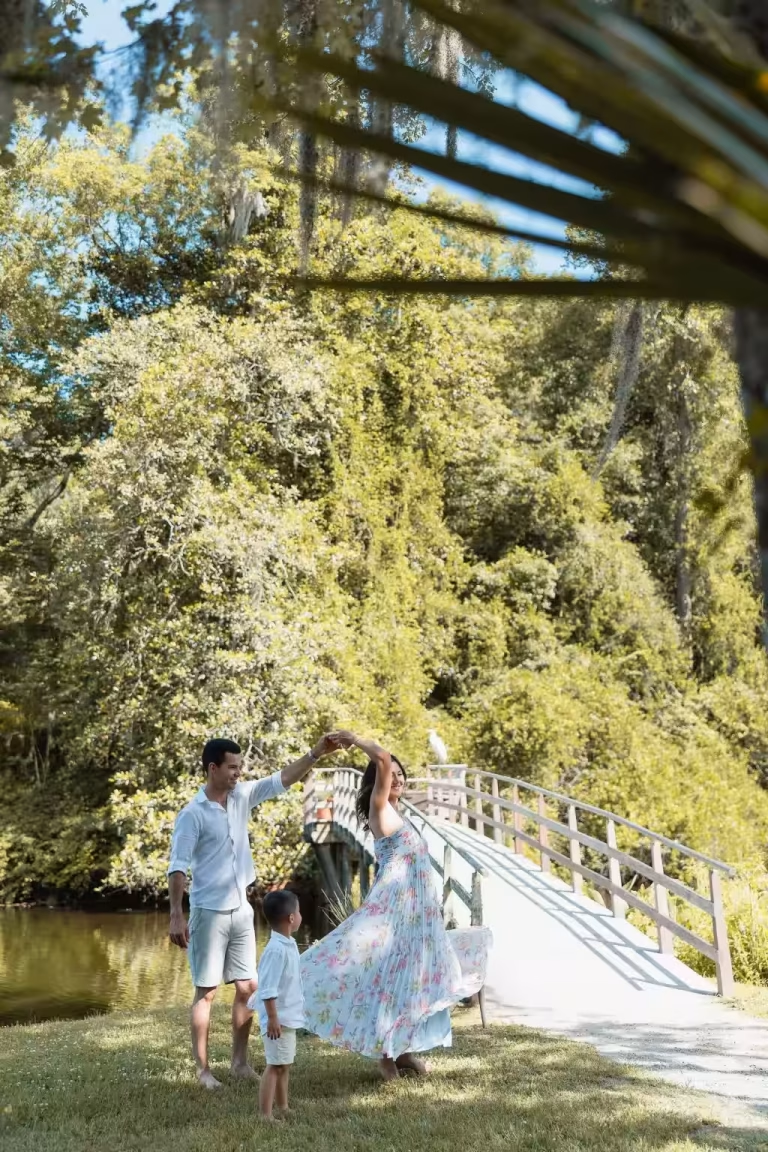
Here the father twirls the mother next to a white footbridge while their son stands between them looking up. The skirt moves, the boy is watching, and the picture tells a small story without anyone posing for it.
The whisper
Someone leans in and whispers into another person’s ear, a secret, a joke or a word you agreed on beforehand, and the photographer catches the reaction. Close pairs lose their fake smile this way: parent and child, two siblings, the couple.
The huddle around a baby
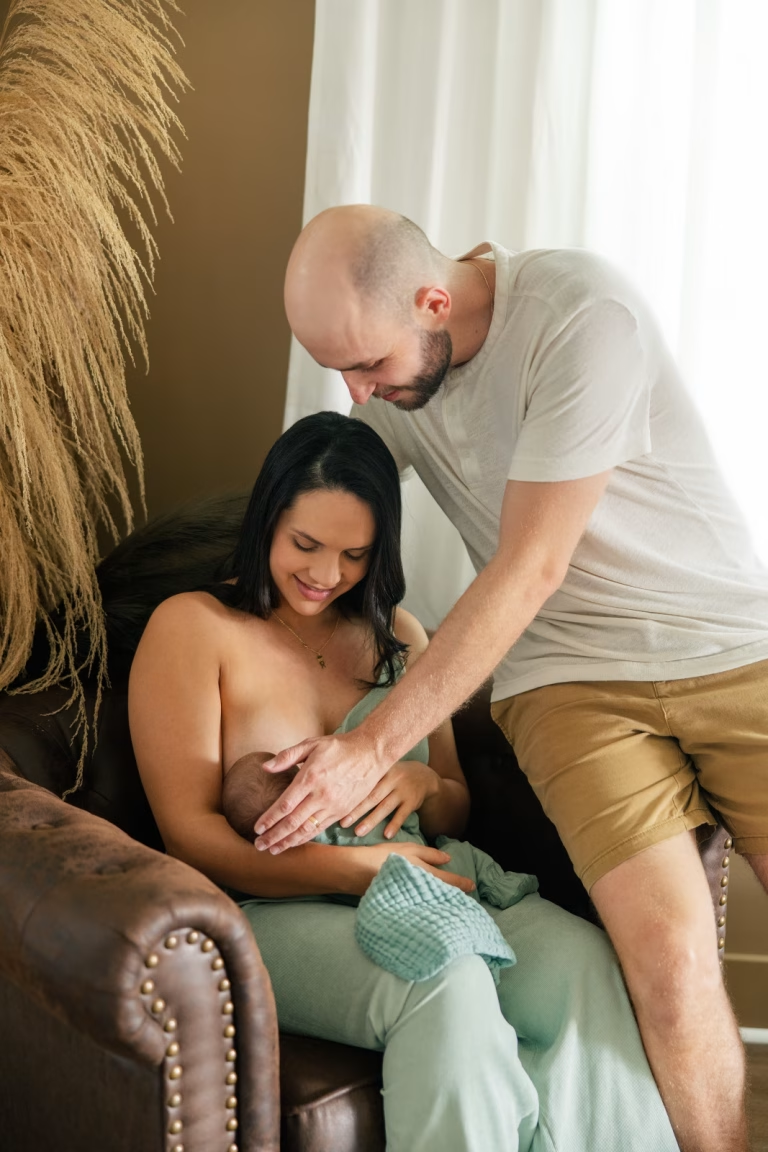
When there is a newborn, everyone leans toward the baby instead of the camera: a parent’s kiss on the forehead, an older sibling’s kiss on the baby’s head, eyes closed. The pose needs no smiles at all, which makes it one of the easiest for tired new parents.
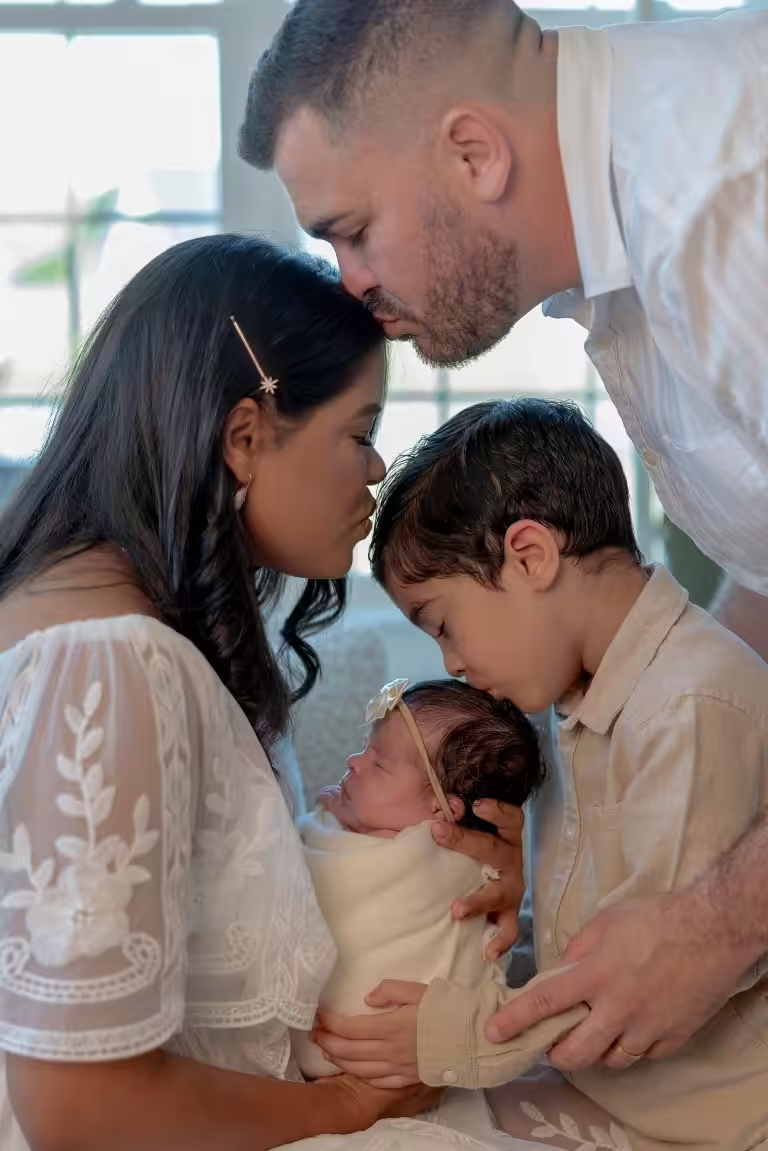
Here the father kisses the mother’s forehead while their son kisses the baby, and every line in the frame points to the newborn. Nobody looks at the lens, and nobody needed to.
Poses for the smaller combinations
Parents only
Two or three frames of the couple alone, foreheads close or one standing behind the other. A good moment for it is while the children take a short break.
Each parent with each child
One parent at the child’s height, kneeling or sitting, looking at the child rather than the lens. These pairs are the frames people tend to print on their own later, so it is worth doing every combination.
Siblings
The oldest anchors the frame, sitting or standing, and the younger ones lean in or sit in front. With a wide age gap, an arm around the shoulders reads better than a forced hug.
Grandparents and grandchildren
Grandparents seated, grandchildren around and in front of them, so nobody has to stand for long. When relatives fly in from another state or another country, this is the frame worth planning around. Bring a written list of the combinations you want so nobody is missed.
Quick reference: what each pose fixes
| Pose | What it fixes | Best for |
|---|---|---|
| Close stand | Gaps, the lined-up look | Every family; the wall portrait |
| Sofa stack | Rows of standing people indoors | Home sessions, studio sets with seating |
| Floor layer | Big height differences, a child who won’t stand | Studio sessions, several children |
| Walk | Stiffness | Outdoors, paths and lawns |
| Lift | The polite smile | Small children, high ceilings or open sky |
| Twirl | Flat dresses, self-conscious adults | Dresses and skirts, the couple |
| Whisper | Fake smiles in close-ups | Pairs of any age |
| Huddle around a baby | Tired faces, forced smiles | Families with a newborn |
| Parents only | A gallery with no picture of the couple | Every family |
| Parent with each child | Missing one-on-one portraits | Every pair |
| Siblings | Age gaps in one frame | Two or more children |
| Grandparents with grandchildren | Tired legs, missed combinations | Visiting relatives |
Which poses fit a family of three, four or six
- Three: a child between two parents works for the close stand, the walk and the lift. Add each parent alone with the child.
- Four or five: the floor layer and the close stand carry the group shots. Split into pairs for the twirl and the whisper.
- Six or more: use two levels, some seated and some standing behind, so every face stays visible. Larger groups usually do better outdoors, where there is room to spread out instead of stacking into rows.
Small fixes that make any pose look relaxed
- Close the gaps. Daylight between people reads as distance. Shoulders and arms should touch.
- Stagger the heads. No two heads at exactly the same height when you can help it; kneel, sit or lean to break the line.
- Give hands a place. On a shoulder, around a waist, holding a smaller hand. Hands hanging at the sides look like waiting.
- Look at each other, then at the lens. A few frames of each give you both the connected picture and the classic one.
- Breathe out before the shutter. Shoulders drop and faces soften.
Teenagers, babies and everyone in between
A teenager pushed to the edge of the group looks exactly as thrilled as they feel. Give them a portrait of their own, framed the way you would frame an adult, and the eye-rolling usually stops.
A baby is easiest to photograph asleep or content in a parent’s arms, so those frames happen whenever the baby allows. A toddler gets the busy, moving setups early, before the patience runs out.
Letting someone else do the directing
You do not need to memorize any of this. A photographer who directs will place each person, fix a hand or a chin, and take the frame before anyone has time to stiffen up. Direction you can see in the pictures is also one of the checks worth making when you choose a family photographer.
At Studio FB USA, sessions are directed in English, Portuguese and Spanish, so grandparents and grandchildren can each hear the instructions in their own language. If your family mixes languages, here are simple prompts for the poses above, in all three:
| Prompt | Português | Español | Used for |
|---|---|---|---|
| Everyone closer, shoulders touching. | Todo mundo mais perto, ombro com ombro. | Todos más cerca, hombro con hombro. | Close stand |
| Look at each other, not at me. | Olhem um para o outro, não para mim. | Mírense, no me miren a mí. | Walk, whisper |
| Walk slowly toward me and keep talking. | Venham devagar na minha direção, conversando. | Caminen despacio hacia mí, sigan hablando. | Walk |
| Whisper something only she can hear. | Fale um segredo no ouvido dela. | Dile un secreto al oído. | Whisper |
| Grandma, sit here; kids, come around her. | Vovó, senta aqui; crianças, venham em volta dela. | Abuela, siéntese aquí; niños, vengan alrededor de ella. | Grandparents and grandchildren |
| Breathe out and drop your shoulders. | Solta o ar e relaxa os ombros. | Suelten el aire y bajen los hombros. | Any pose |
To plan the poses around your family, talk to a family photographer in Summerville about who is coming and the age of the youngest, or book a family session with Studio FB USA by calling or texting (843) 727-5264.