




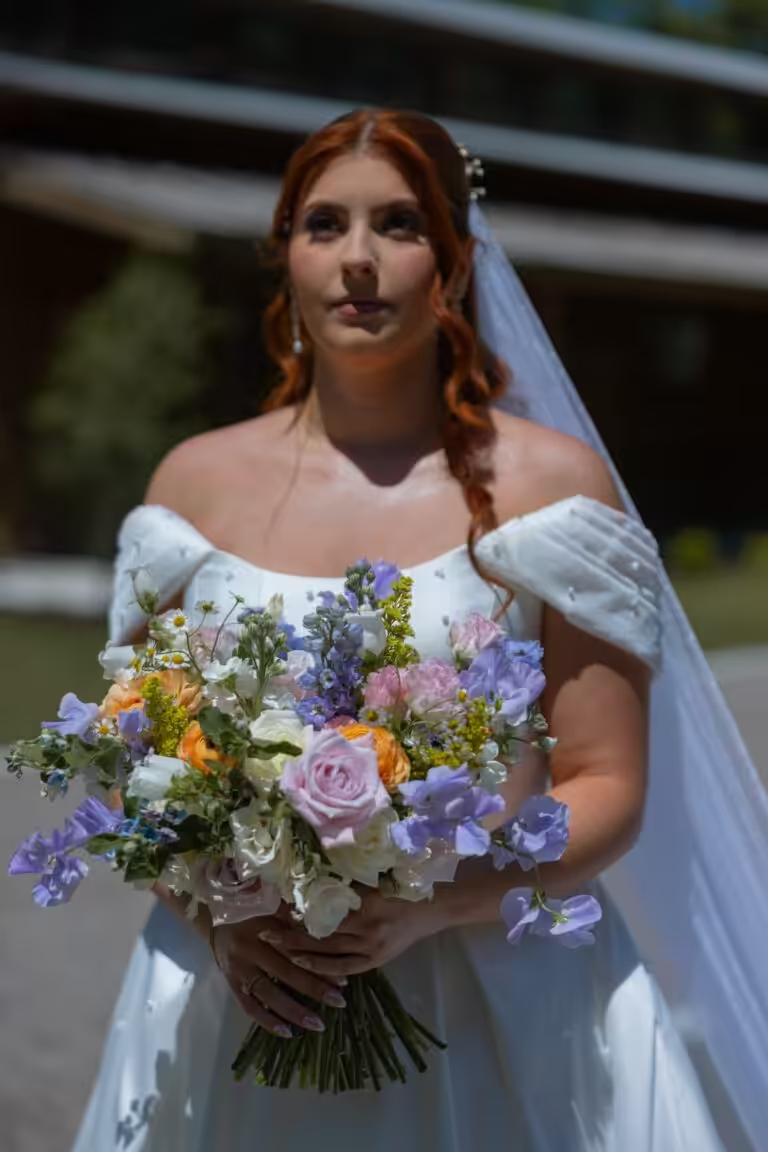
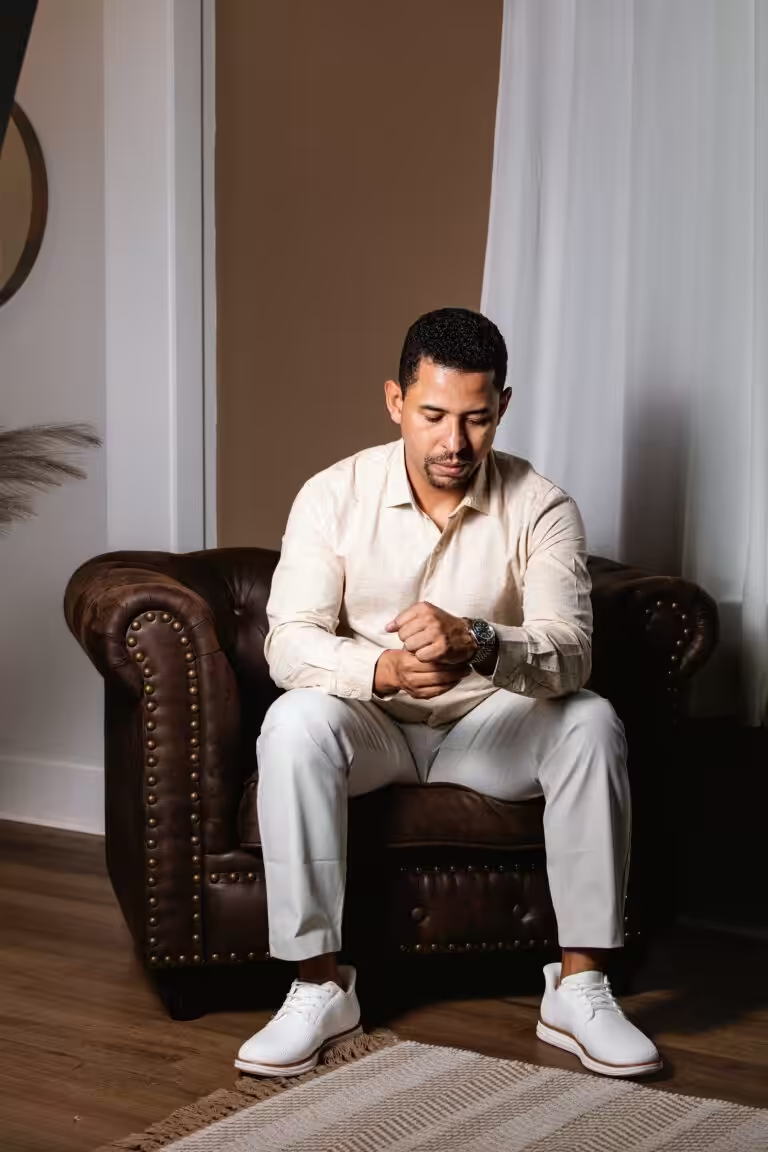

To prepare for a headshot, decide where the photo will be used, wear one well-fitted outfit in a solid color with a second layer in the bag, and keep your grooming routine exactly as it is that week. Arrive rested, and leave the posing to the photographer.
The rest depends on a few decisions: the background and crop, studio or office, and what to do about glasses, a beard or makeup. Each one is below, with a checklist to print at the end.
First, decide where the headshot will live
Few photos get reused as much as a headshot. The same file ends up on the company site, in your email signature, on a proposal cover and on an event program, usually at the same time. Where it will appear decides how it should be made.
| If the photo will live on… | Then ask for | And bring or send |
|---|---|---|
| A light website or a light slide deck | A light background | A link to the page or a slide |
| A dark website, a dark deck or a speaker screen | A dark background | The deck template |
| Profiles that crop into a circle or square | Room around the shoulders, so it can be cropped square, round or wide without cutting the face | The list of platforms |
| A team page that already exists | The same background, light and framing as the others | One existing headshot from the page |
| A banner, a sign or printed materials | A crop and file size planned for print | The print size, if you know it |
Studio FB USA chooses the background for professional headshots in Charleston by where the image will actually sit, so bring that list to the session.
What to send the photographer before the session
A commercial session at Studio FB USA starts with four answers: what the business is, how many people are being photographed, where the images will be published, and the deadline you are working against. With those, the studio comes back with a plan: studio or location, a shot list and a running order.
If a launch, a rebrand or a hiring push is driving the date, say so first. It usually decides the whole schedule, including how much time there is for editing before the images have to go live.
Studio or your workplace?
In the studio, the light is set up for you and stays the same from frame to frame, which makes it the consistent option. At your workplace, the room itself becomes part of the message: an office, a site, a storefront.
When the photo has to look like everyone else’s on the team page, choose whichever setting the rest of the team was photographed in. If you are a business owner whose workplace says something about the work, a few environmental frames on site are worth the trip.
If you wear glasses
Wear them in the photo if you wear them every day. Clients who meet you will see you in them, and the headshot should look like the person who walks into the room.
Reflections are the usual problem, because studio lights bounce off lenses. Clean the lenses before you sit down, and expect the photographer to adjust the angle of the light or your head slightly to move the reflection off the glass. If you are deciding between two frames, bring both.
If you shave, trim or plan a haircut
Get a haircut about a week before, not the day before, so it has time to settle. This is also not the week for a new color or a new style you have never worn.
If you shave, the American Academy of Dermatology recommends shaving after a shower, when skin and hair are soft, using a shaving cream or gel and shaving in the direction the hair grows to help prevent razor bumps and razor burn (AAD, How to shave).
Skin that reacts to shaving is better shaved the evening before, so any redness has the night to calm down.
A beard needs a trim a day or two ahead, with the neckline cleaned up. Bring a small comb for the beard and the hair.
If you wear makeup
Wear the version you wear to an important meeting, slightly more polished, not a new look. Matte finishes photograph more evenly than shimmer, and a little powder on the forehead and nose helps with shine under studio lights.
You do not need to chase perfection. Retouching at Studio FB USA is natural: blemishes and stray hairs are removed and skin is evened out, but nothing about your face is changed, because the person in the photo has to be the person who shows up to the meeting.
Clothes: one solid outfit and one layer
Dress as if you were meeting your most important client. Solid colors, a good fit and tones that suit you and your brand photograph best; busy patterns, large logos and anything that will look dated in two years do not.
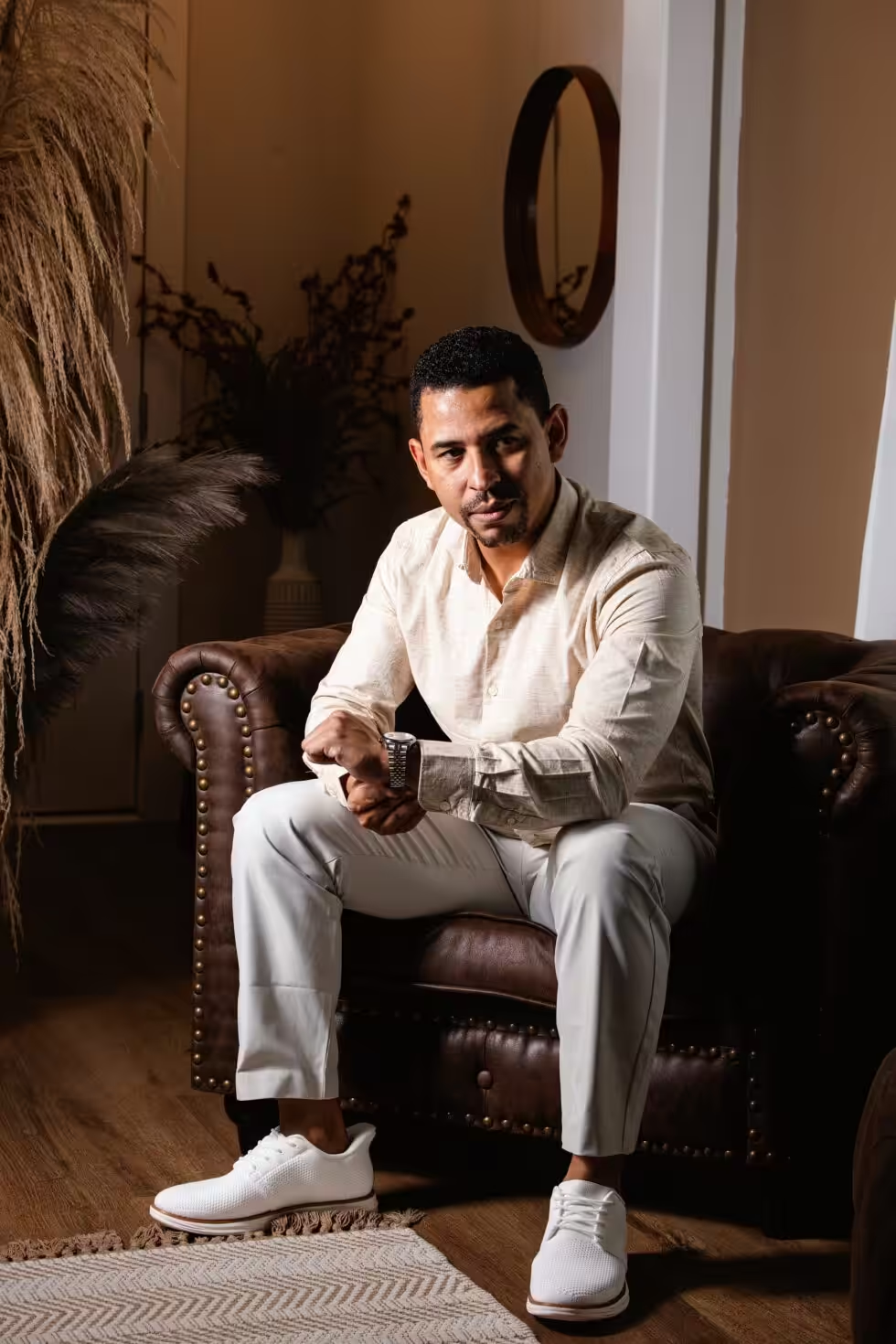
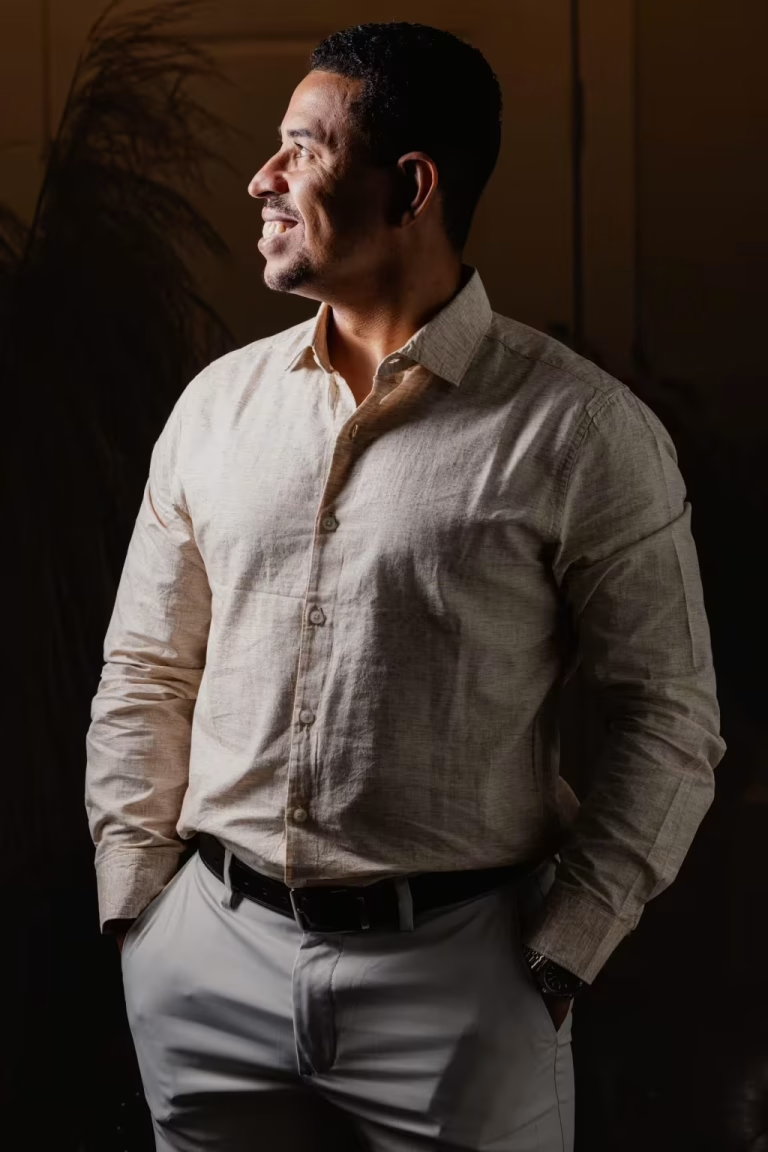
Fit shows most in the details: sleeves, cuffs and collars. In this frame from Ramon’s branding session, a plain cream shirt that fits at the wrist lets the hands and the expression carry the picture.
Bring a second option, such as a jacket or a different shirt, for variety. A jacket also gives your hands and shoulders some structure.

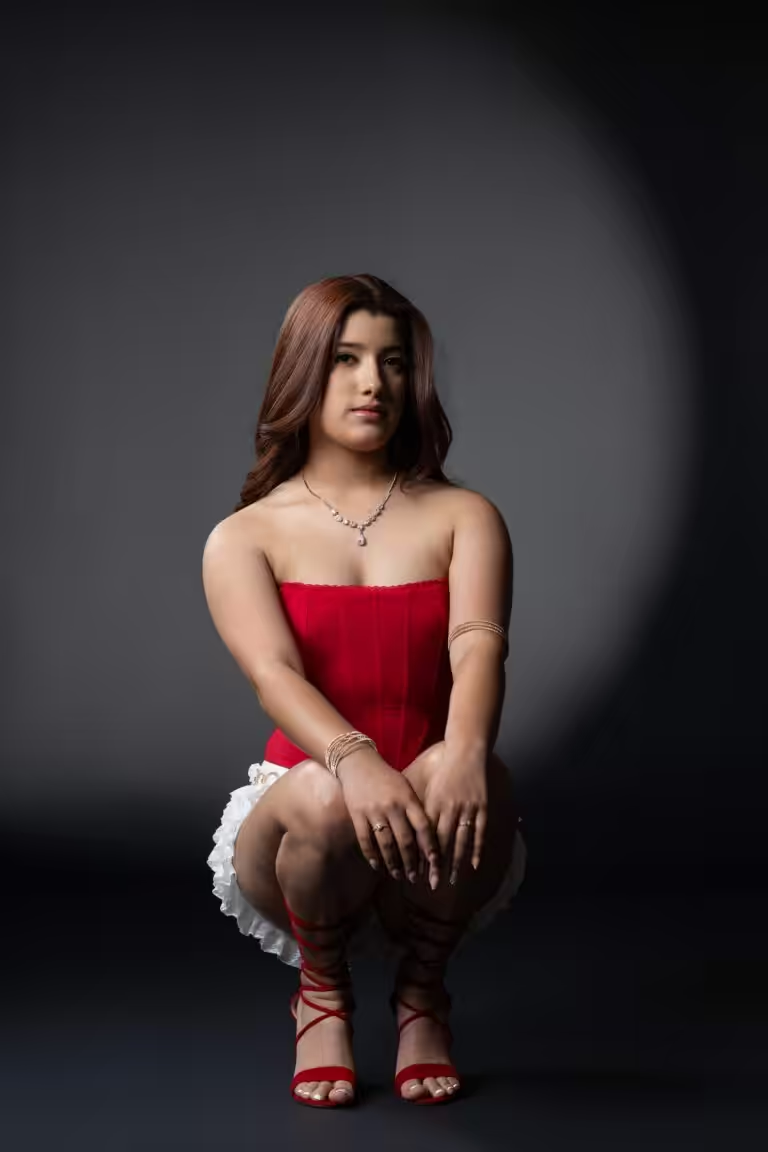
A blazer over a simple top, as in Gabi’s session, works in a tight headshot and in a wider frame alike.
Colors, jewelry and the smile question
Solid colors in tones that suit your skin and your brand are the safe choice. Very busy patterns and large logos pull the eye away from your face, and small, high-contrast prints can look noisy once the image is shrunk to profile size. Jewelry you wear every day is fine; anything you keep touching is not.
Should you smile? Get both. A relaxed, closed-mouth expression and an open smile cover almost every use, and you can choose later with the pictures side by side.
If the whole team is being photographed
A team page rarely suffers from one weak photo; it suffers from photos that were never made to sit side by side. A team session solves that by giving everyone the same background, the same light, the same framing and the same edit, and by repeating that setup when someone new joins.
Team sessions run on a schedule, at your building or at the studio, so each person is away from their desk for only a few minutes. Send everyone the same short note about clothes and timing a week ahead, and put the people with the tightest calendars first on the list.
What happens once you sit down
A session starts with a short conversation about where the image will be used. Then the photographer works through a few variations of expression and framing, with quick, specific direction: where to look, how to hold your shoulders, when to relax.
Most people have a preferred side and a natural expression that shows up after the first few minutes. Finding it is the photographer’s job, not yours.
The frames are reviewed on the spot so you leave knowing you have an image you like. If you want to know what that direction looks like, our guide to posing, step by step walks through it.
Planning a team headshot day: what to fill in
For a company, the preparation is mostly logistics. These are the details a team session at Studio FB USA is planned around; filling them in before the first call saves a round of emails.
| Detail | Why it matters |
|---|---|
| Studio or your office, and which room | At the office, one room with space for a background and lights; at the studio, nothing to set up on your side |
| The list of names, in order | People with the tightest calendars go first; each person is away from their desk for only a few minutes |
| One existing headshot from your team page | So background, light and framing can be matched |
| Where the images will be published | Decides the background, the crops and the orientations delivered |
| Who sends the clothing note to the team | One short note a week ahead, so everyone arrives in the same register |
| The deadline, and what is driving it | A launch, a rebrand or a hiring push sets the editing schedule |
| A date for the next round | A recurring headshot day keeps new hires consistent with the rest |
| Languages spoken on the team | Direction can be given in English, Portuguese or Spanish |
The night-before and morning-of checklist
Print this, or keep it on your phone.
- A week before: haircut, and no new hair color or skincare.
- Three days before: try on the outfit and the second layer, sitting down as well as standing.
- One or two days before: trim the beard and clean up the neckline.
- Write down where the photo will be used and send it to the photographer.
- Night before: shave if your skin tends to redden; steam or press both outfits and hang them.
- Pack a comb, lint roller, lip balm, blotting papers or powder, and a lens cloth if you wear glasses.
- Get a full night of sleep and drink water through the evening.
- Morning of: eat a real meal and leave extra time for parking.
- Arrive with clean lenses, dry hair and the outfit on a hanger, not folded in a bag.
- At the studio: tell the photographer your preferred side if you know it, then follow the direction.
How long a headshot stays current
The practical rule Studio FB USA gives clients is a new headshot every two to three years, and sooner after a real change in how you look, your role or your company. A photo that no longer looks like you undermines you a little on every page that shows it.
For companies that hire regularly, a recurring headshot day every few months keeps the team page consistent without photographing each new hire separately.
Studio FB USA photographs headshots for individuals and teams in Summerville, Charleston, Mount Pleasant, North Charleston, Goose Creek, Moncks Corner and Ladson, in English, Portuguese or Spanish. Tell us whether it is one person or a team, and studio or office, then book a headshot session with Studio FB USA or call or text (843) 727-5264.