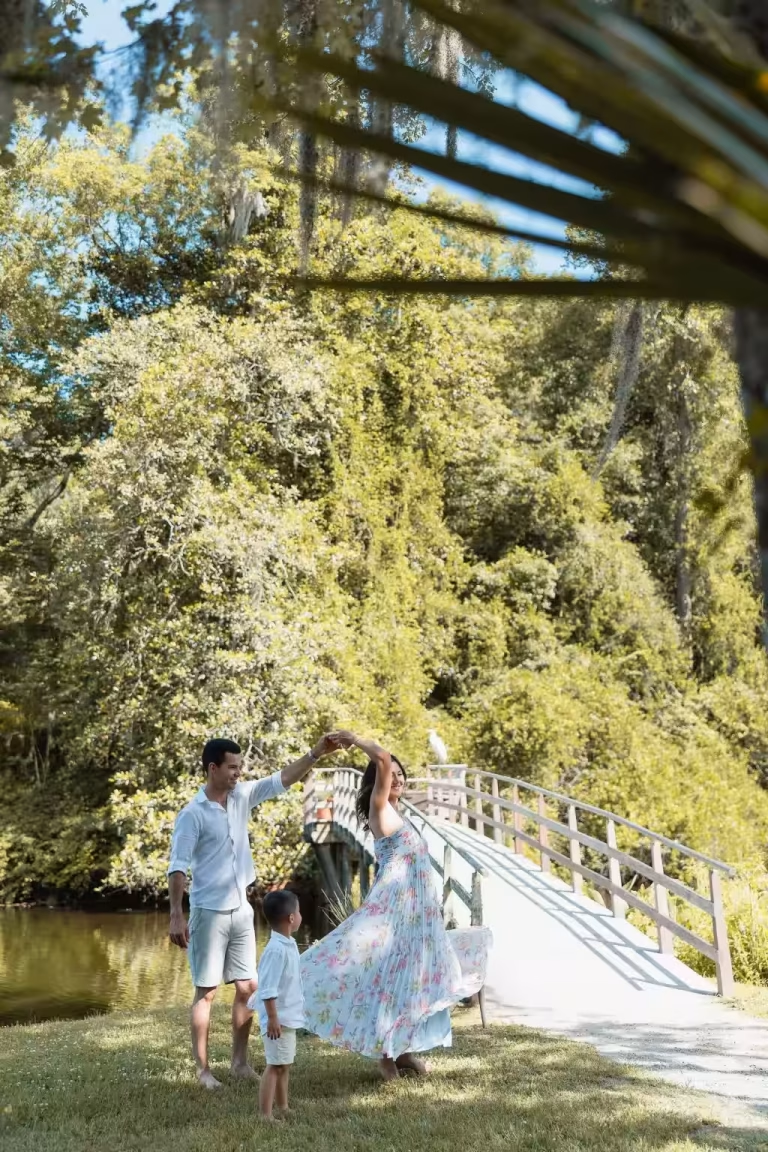











The most common mistake on a Folly Beach photoshoot is one that photo blogs still suggest: stepping into the dunes for the shot with the sea oats behind you.
On Folly that is more than bad manners: the city’s rules say it is unlawful to be on the sand dunes except on the walkovers, or to cut or break sea oats.
The short version of a good session: choose an evening when the tide is low or falling around sunset, meet at a public beach access, work on the open sand and at the water’s edge, and leave balloons, glass and, on summer days, the dog at home. Everything below explains why, with real numbers for one month.
What a Folly Beach session looks like
Folly is the beach town at the end of Folly Road, south of Charleston, with a long public beach and a fishing pier in the middle. A session there is an outdoor portrait sitting on the sand, usually in the last hour of daylight, for a family, a couple or an expecting mother.
We are a studio in Summerville, and Folly Beach is on the list of places we drive to for family photos in the Charleston area, along with Isle of Palms and Sullivan’s Island. A location like this says where your family lives now, and it gives a big group room to spread out instead of standing in rows.
What makes Folly different from a park is that the setting moves. The width of the beach changes through the day with the tide, the sun sets behind the island rather than over the water, and the busiest blocks fill up from spring to fall.
Read the tide chart before the weather forecast
On a beach session, the date is set by two clocks: sunset and the tide. A low or falling tide in the last hour of light gives you the widest beach and wet sand that reflects people like a mirror. A high tide at the same hour pushes everyone toward the dunes, which is exactly where you cannot go.
To show how much this matters, here are the five Saturdays of May 2026, with sunset from the U.S. Naval Observatory for Folly Beach and the evening tide from NOAA’s predictions for the Folly Island (outer coast) station. Times are Eastern Daylight Time.
| Saturday | Sunset | Evening tide | What the last hour looks like |
|---|---|---|---|
| May 2 | 8:02 pm | High at 9:22 pm | Water climbing through golden hour; less dry sand each minute |
| May 9 | 8:07 pm | Low at 7:51 pm | Low water right at sunset: the widest beach and the best reflections |
| May 16 | 8:12 pm | High at 8:19 pm | New moon, and one of the highest evening tides of the month: a narrow strip of sand |
| May 23 | 8:17 pm | Low at 8:42 pm | Falling tide; the beach keeps widening as the light warms |
| May 30 | 8:21 pm | High at 8:19 pm | High water at sunset |
Two of five Saturdays line up well. The pattern repeats all year: each evening tide arrives later than the night before (in May 2026, by roughly 50 to 65 minutes a day), so a good evening comes back about two weeks later, as May 9 and May 23 show.
If your weekend falls on a high tide, a weekday evening several days either side often fixes it.
In May 2026, the Thursday and Friday after the high-tide Saturday had their low tides at 6:32 pm and 7:37 pm.
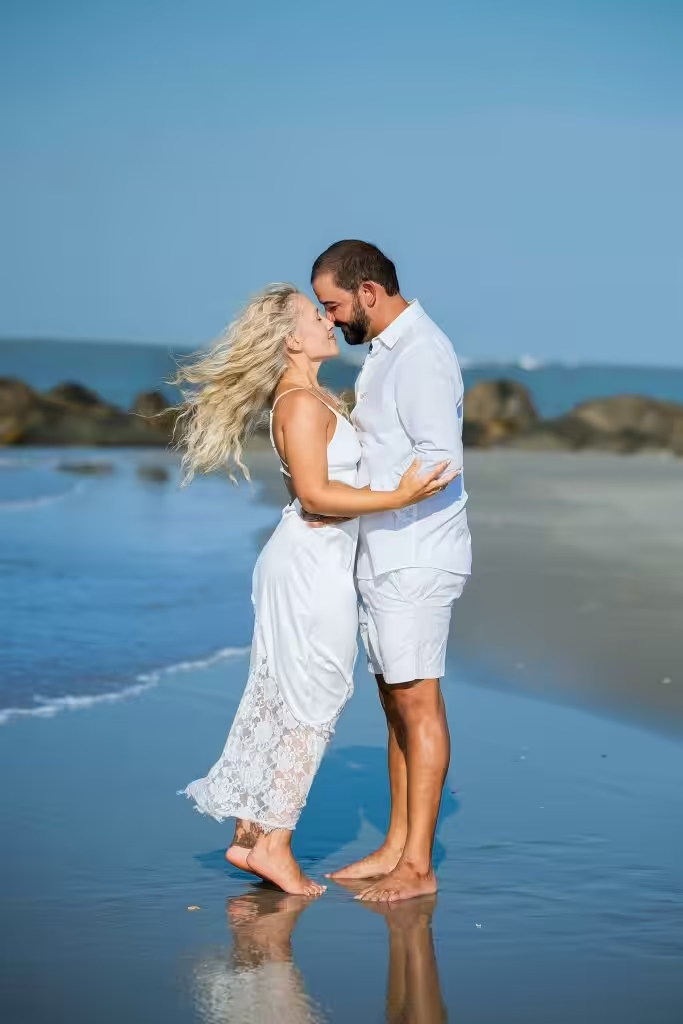
A frame from our photo library: the thin film of water at the edge of the waves doubles the couple in reflection, and the wind off the ocean does the rest with hair and hems. A low or falling tide simply gives you much more of that flat, wet sand to work with.
To check your own date, open NOAA’s tide predictions for Folly Island (outer coast), find the evening high and low, and compare them with the sunset time for that day. If the low tide falls within about an hour of sunset, or the tide is going out through the last hour of light, the evening is a good candidate.
The morning is not an automatic rescue. On May 16 the morning high came at 7:52 am, right in the soft light after sunrise, and the low tide arrived at 1:53 pm, in the flattest light of the day.
Where the light comes from on Folly
Folly’s beach faces the Atlantic to the southeast. The sun comes up over the water and goes down behind the island, so at sunset the ocean side of the beach is lit softly from the land, and faces turned toward the dunes catch the warm light.
That is why the hour we plan beach sessions around is the last one before sunset. It is the same light our page on engagement photos in Charleston describes for couples: soft, warm, and kind to skin. Midday is avoided, and sunrise works too if your family is up early, with the sun rising over the water behind you.
The city notes that Folly Beach County Park, at the west end, has one of the best views of the sunset on the island. It is worth a few extra minutes of driving if the sky is the point of the picture.
Choosing a spot on the island
- Around the pier: the pier sits at 101 East Arctic Avenue, in the middle of town, and pets are never allowed on it. The city calls the stretch from 2nd Street East to 3rd Street West the swimming zone, lifeguarded from May through Labor Day, and discourages events near the pier from May to October because of crowding.
- The west end: Folly Beach County Park, at 1100 West Ashley Avenue, has parking and beach access, and Bird Key, a shorebird rookery, is visible from its far end. Reviews of the park keep returning to clean sand, changing rooms and showers, and shark-tooth hunting, which tells you it is an easy place to bring small children.
- The east end: at the eastern tip of the island, a gate leads into the old Coast Guard property, toward the Morris Island Lighthouse. No vehicles or golf carts go through that gate, so plan the walk in and out, especially with grandparents or a stroller.
- A numbered beach access: public walkovers sit at every block, most of them numbered, such as 4E or 6W. Between the houses the beach is usually quieter than near the pier, and the access number becomes the meeting point.
The city’s own advice for first-timers is practical: note the street and block where you parked, and turn around when your feet hit the sand to note the access number. Parking rules are strictly enforced, with all four tires off the road and cars parked with the flow of traffic.
City rules that change the photos
Most of Folly’s beach rules were written for beachgoers, but several of them decide what a photo session can include. You can read the full list on the City of Folly Beach rules page.
| Rule | What it means for your session |
|---|---|
| Stay off the dunes and sea oats; use the public walkovers | No posing in the dunes. The sea oats can still be a soft background from the open sand. |
| No balloons, plastic or styrofoam on the beach | Leave the balloon bunch for the studio or the backyard. |
| No glass and no alcohol on the beach | No champagne toast with real glasses; bring water in plastic you take back out. |
| No open fires or fireworks at any time | No sparklers or torches for the last frames. |
| Dogs not allowed from 10 am to 6 pm, May 1 to September 30; leashed at other times | A summer sunset session can include the dog; a midday one cannot. |
| No lights on the front beach from 10 pm to dawn, May 1 to October 31 (sea turtles) | Plan to finish with the sun, and keep clear of any marked nest. |
| Holes deeper than one foot are illegal; items left after sunset count as abandoned | Props, blankets and chairs come and go with you. |
Permits and the photographer’s paperwork
Folly Beach has its own rules for commercial shoots. The city’s page on commercial filming and photo shoots describes a permit application and a city business license, and its rules for weddings and events on the beach say that all vendors must hold a business license with the City of Folly Beach.
That paperwork belongs to the photographer, not to your family. It is a fair question to ask when you book any photographer for Folly, and a good one to ask early if your group is large.
Kids, dogs and big groups on open sand
Open sand is forgiving with children. Nobody has to stand still in front of a wall, and a toddler who runs to the water can be photographed running to the water. The trick is order: the full group first, while everyone is clean and patient, then the smaller combinations, then the free play at the edge of the waves.
The positions that work on a beach are the ones from our guide to family photo poses, with one change: on soft sand, sitting and walking look more natural than standing still.
For clothing, two notes are enough here: light fabrics that move in the wind, and nothing you mind getting wet at the hem. Bare feet are easiest on soft sand.
If the dog is coming between May and September, the 6 pm rule decides the time, and a leash that can be held out of frame helps more than any treat.
When the beach says no
Agree on a rain plan before the week arrives. An outdoor date is set by the light rather than by convenience, so a backup evening, ideally one that also lines up with a good tide, is part of booking a beach session.
Heat is the other limit. In July and August, coastal humidity and afternoon storms are the rule. For small babies, grandparents or a mother late in pregnancy, our studio in Summerville is the version of the session that survives a summer afternoon.
Some families split it across the year: the beach in October or early spring, the studio in midsummer.
Pick two or three evenings that suit your family, and we will check them against the tide before anything goes on the calendar. Plan a Folly Beach session with Studio FB USA.