



Newborn photos with siblings are the frames where the older child, the new baby and the camera meet for the first time. They are a short part of the session, planned around one question: what can this particular child do safely, and happily, at their age?
The short answer: a toddler sits beside a parent who holds the baby; a preschooler lies or sits next to the baby while an adult keeps a hand on it; a child of five or older can hold the baby on their lap with support.
In every case the sibling photos come early in the session, while patience lasts, and an adult hand stays on the baby the whole time.
Start with your older child’s age
The American Academy of Pediatrics groups children’s reactions to a new baby by age: toddlers of one to two, preschoolers of two to four, and school-age children of five and up. Those same groups decide what a sibling frame can look like.
| Older child’s age | What the AAP notes about this age | Pose that usually works | Hands on the baby | A good result |
|---|---|---|---|---|
| 1 to 2 | May not understand much about having a sibling yet | On a parent’s lap or beside them while the parent holds the baby | The parent’s, the whole time | One or two frames where both faces are visible |
| 2 to 4 | Still learning to share; may feel they must compete for attention | Lying or sitting next to the swaddled baby, looking, touching a hand or foot | An adult’s, just out of frame | A few frames, plus a moment they choose themselves |
| 5 and up | Less threatened, can resent the attention; can hold the baby after asking and being shown how | Seated, the baby across their lap or in their arms, a pillow under the elbow | An adult’s, close enough to take over | Posed frames and candid ones |
| Teenagers | — | Holding the baby like an adult would, standing or seated | Their own, with a parent beside them | Real portraits of the two of them |
If your older child is one or two
Plan for one or two good frames, and count anything more as a bonus. Our notes on newborn sessions say it plainly: for siblings under four, keep expectations modest, because the rest of the session belongs to the baby.
At this age the safest picture is also the easiest one. A parent sits holding the swaddled baby, and the toddler sits on the other knee or stands at the parent’s side. The child does not need to look at the camera; looking at the baby is the better photograph.
The AAP suggests reading picture books about new babies and siblings with toddlers before the birth, so words like brother, sister and baby are already familiar. It also helps if the session is not the first time they see the baby up close.
If they are two to four
Preschoolers can be part of the pose rather than beside it. A simple setup: the older child lies on a blanket or sits on the floor, the wrapped baby is placed next to them, and a parent kneels just outside the frame with a hand on the baby.
Small actions give the child something to do: touching a foot, finding the baby’s fingers, whispering a secret.
The AAP notes that children this age may feel they need to compete for attention, and suggests involving them in getting ready for the baby. In a session, that can mean giving them a job: choosing the blanket, holding the baby’s hat, or being the first person photographed.
If your child says no, take the no. A frame of them sitting near the baby, or on a parent’s lap with the baby in the other arm, still tells the story.
If they are five or older
Older children can usually hold the baby. The AAP’s advice for school-age siblings is to let them hold the baby after they ask first, and to teach them how; a session is a natural moment to practice that, seated, with a pillow under the elbow and a parent close enough to take over.
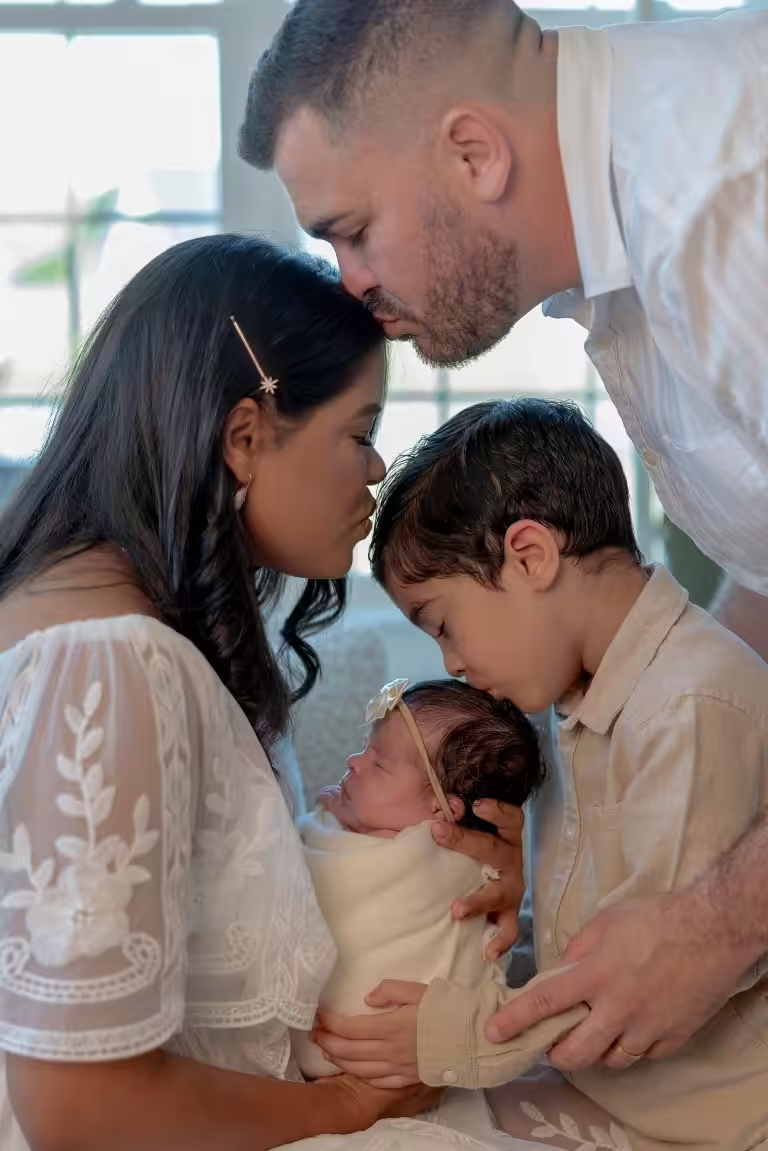
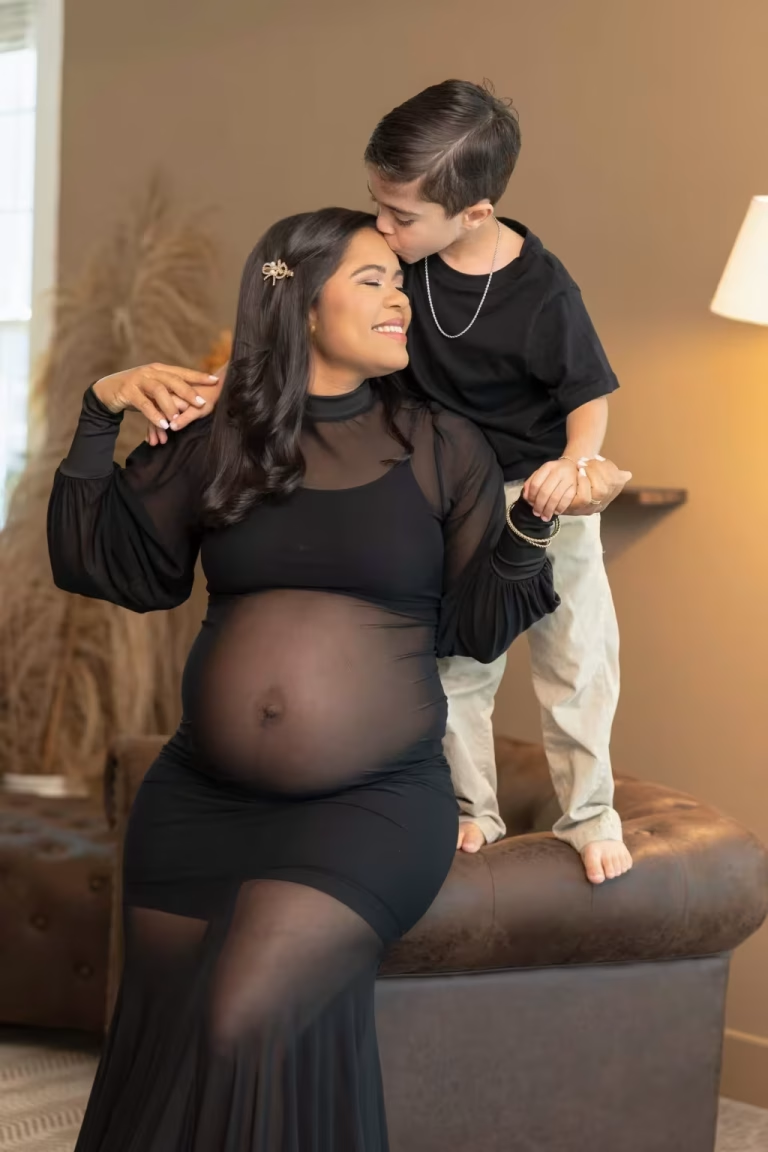
Older siblings also do the gestures that a toddler cannot hold still for. In the frame above, the boy leans in to kiss the baby’s head while the mother holds the baby and the father kisses her forehead. The baby never leaves the mother’s arms, and the photograph still belongs to the brother.
Teenagers are a different case again. Our studio notes on family sessions say teenagers should be treated like adults and given real portraits rather than an afterthought, and the same goes for a teenager holding a newborn brother or sister.
Where the sibling frames go in the session
Our newborn page says siblings are photographed early, while patience lasts. An order that follows that rule:
- The whole family together, while everyone is fresh.
- The older child with the baby, for as long as the child is enjoying it.
- Each parent with the baby, and the parents together.
- The baby alone, at the baby’s pace, with breaks for feeding and comfort.
Once their part is done, the older child is free. A snack, a book or a short trip outside with one adult keeps the room quiet for the newborn frames that follow.
One adult hand on the baby, always
Our newborn page puts the rule in one line: hands stay on the baby at every moment, ours or yours. With a sibling in the frame, the natural place for that hand is a parent sitting or kneeling just beside the child, ready to lift the baby at the first wriggle.
The same page explains that the newborn poses which appear to defy gravity are assembled afterward from frames in which somebody was always holding on. Before you book any newborn photographer, ask how they keep the baby supported in sibling frames.
Preparing the older child before the day
- Talk about it. Tell them there will be pictures with the baby and what their part is.
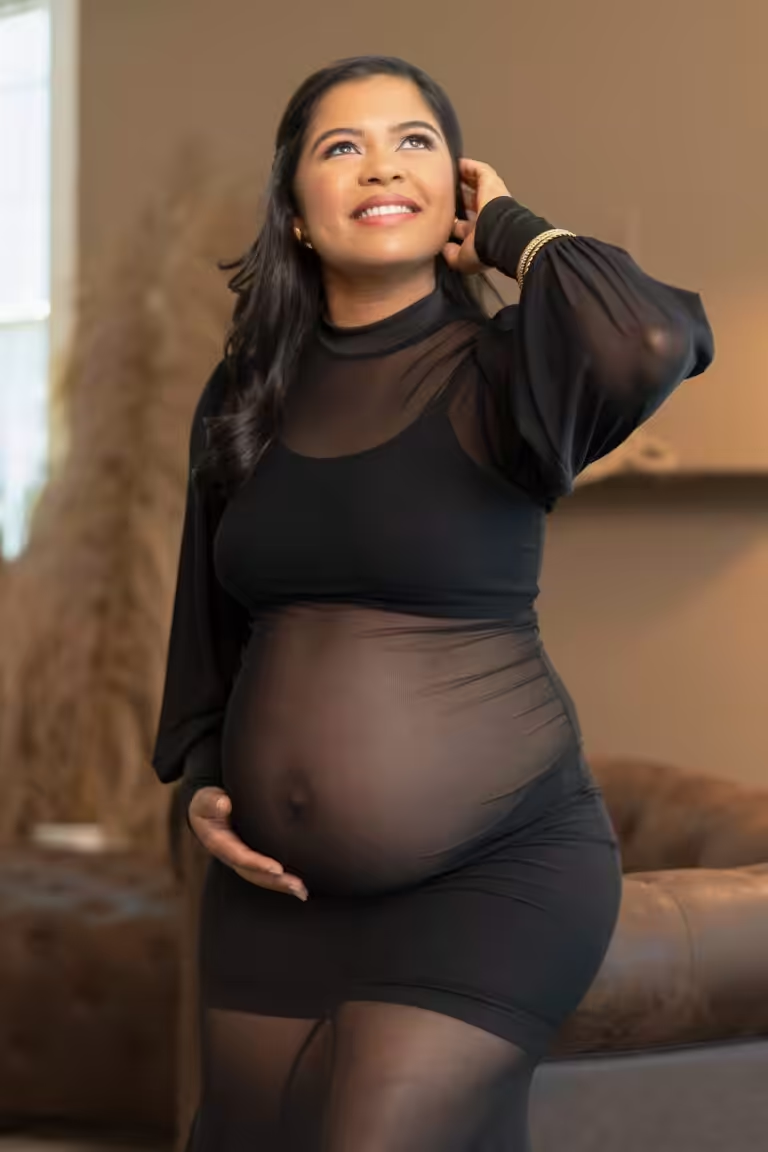
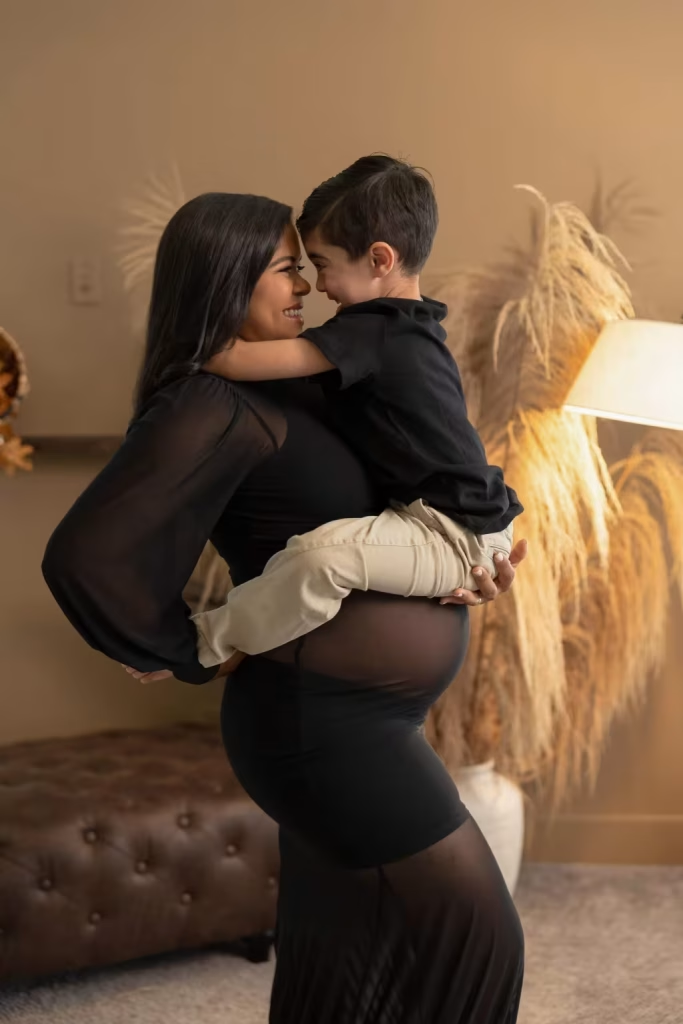
- Bring them to the maternity session, if there is one. At the top of this page, in Juliana’s maternity session, a little boy on her hip leans his forehead against hers. Our maternity notes mention frames like an older sibling kissing the bump, and family frames come first there too, as our guide to maternity photo poses explains.
- Show them their own baby pictures. The AAP suggests this for preschoolers before the birth; it doubles as a preview of the session.
- Keep the night before ordinary. A normal bedtime matters more than any outfit.
- Dress them simply. Solid colors without logos keep the baby the focus; our guide on what to wear for newborn photos covers siblings and parents.
- Pack a spare top. Babies spit up, and toddlers find water.
Studio or home with an older child
Our newborn page describes two settings. In the studio, temperature, light and sound are set before you arrive, which suits the quiet posed frames. An in-home session is the documentary version, with the older child climbing on the bed and the dog in at least one frame, and no car seat for a baby a few days old.
A home session often suits a toddler better; as our family page puts it, toddlers behave better on their own floor than anywhere else. The differences between the two styles are compared in lifestyle vs posed newborn photography.
The photographs grandparents ask for first
Our studio notes say it directly: the sibling frames are the ones grandparents ask for first. They also depend on the same short window as the rest of a newborn session, the first five to fourteen days for the curled, sleepy look, which is why we hold a date during the pregnancy and move it when the baby arrives.
Tell us the due date and how old the big brother or sister will be, and we will plan the order around them. Start with our newborn photos in Summerville, in the studio or at your home, then hold a newborn date with Studio FB USA.