
In some cities, a courthouse wedding means a clerk, a counter and a few minutes in front of a judge. In Charleston, the part of a courthouse wedding that has to happen at the courthouse is the paperwork: the marriage license comes from the Charleston County Probate Court on Broad Street, and the vows can be said almost anywhere.
The short version, under South Carolina law: the written application for the license is filed at least 24 hours before the license is issued, the couple hands the license to whoever performs the ceremony, and that person must be a minister, a rabbi or an officer authorized to administer oaths, such as a notary public.
Whether the court itself holds ceremonies on site is the court’s call, so ask when you apply; if it does not, a notary or a minister can marry you the same day the license is in hand, wherever you choose.
Step 1: Apply for the license at least a day ahead
Section 20-1-220 of the South Carolina Code of Laws says no marriage license may be issued unless a written application was filed with the probate judge at least twenty-four hours before. Both partners sign the application, which includes their Social Security numbers, or the alien identification numbers of resident aliens who do not have one.
Section 20-1-230 adds the other conditions for issuing the license: the fee provided by law and a sworn statement that the two of you are legally entitled to marry. The Probate Court posts the current fee and the payment methods it takes; amounts are left out here because they change.
Anyone between 18 and 25 must also show documentary proof of age (Section 20-1-270). Before the first trip downtown, check the court’s page or call to confirm which documents it accepts and whether part of the application can be started online.
Step 2: Choose who marries you
Section 20-1-20 limits who may perform a marriage ceremony in South Carolina to ministers of the Gospel, Jewish rabbis, officers authorized to administer oaths in the state, and the chief or spiritual leader of a recognized Native American Indian entity.
Notaries public fit through the oath clause: Section 26-1-90 lists administering oaths and affirmations among the acts a notary may perform.
For couples who want a civil ceremony, that means a notary who performs weddings, met at a time and place the couple chooses. A minister or a rabbi works the same way when the ceremony is religious but still small.
The full text of these sections is in Title 20, Chapter 1 of the South Carolina Code, which is the place to check before relying on any summary, this one included.
Step 3: Pick the place, which does not have to be a courtroom
The law cares about the license, not the room. Section 20-1-210 makes it unlawful to marry without a license, and unlawful for anyone to perform the ceremony unless the couple first delivers the license to the officiant. Nothing in it requires the ceremony to happen inside a courthouse.
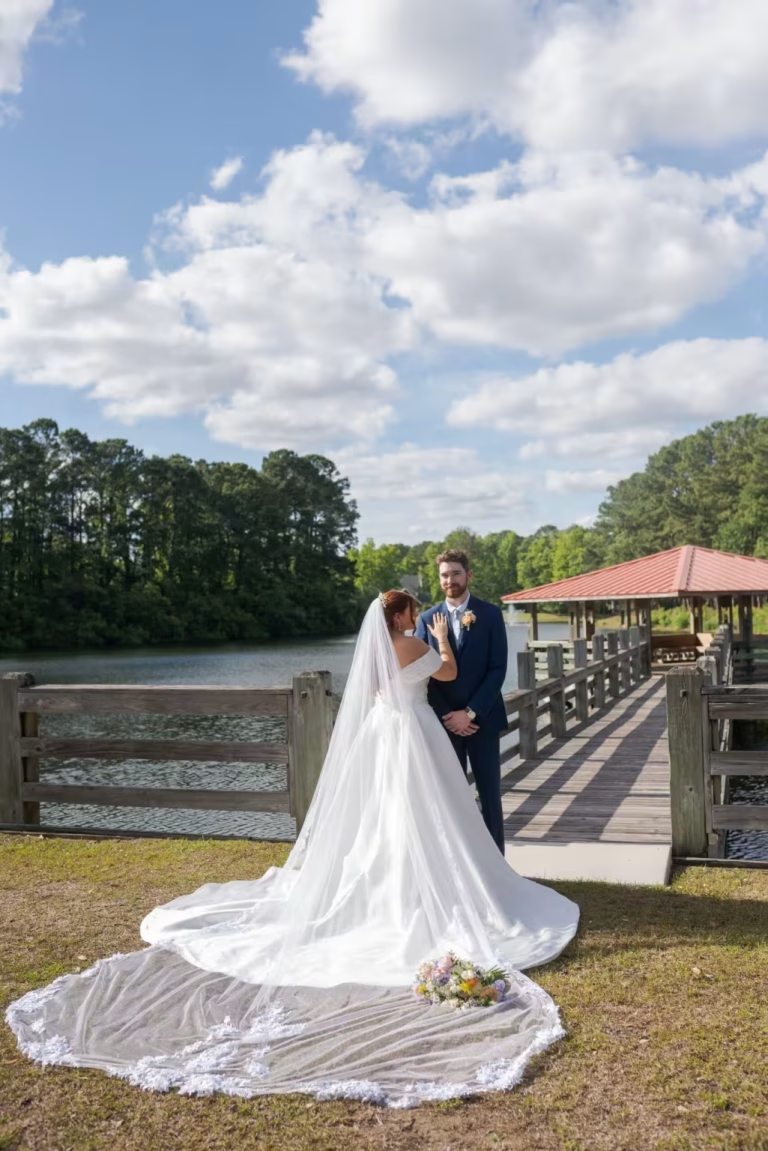
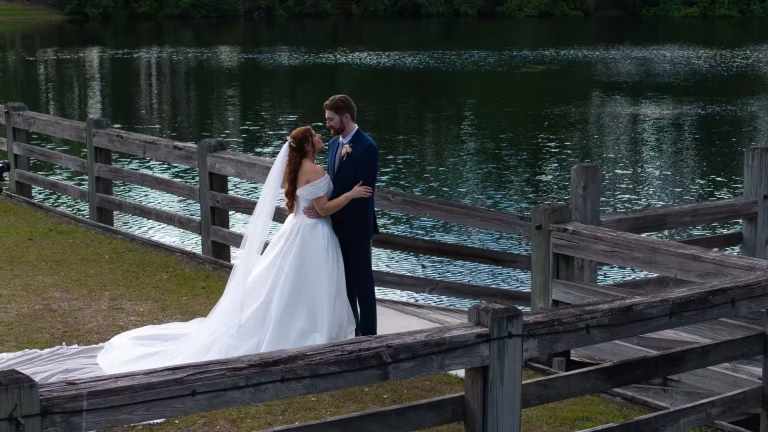
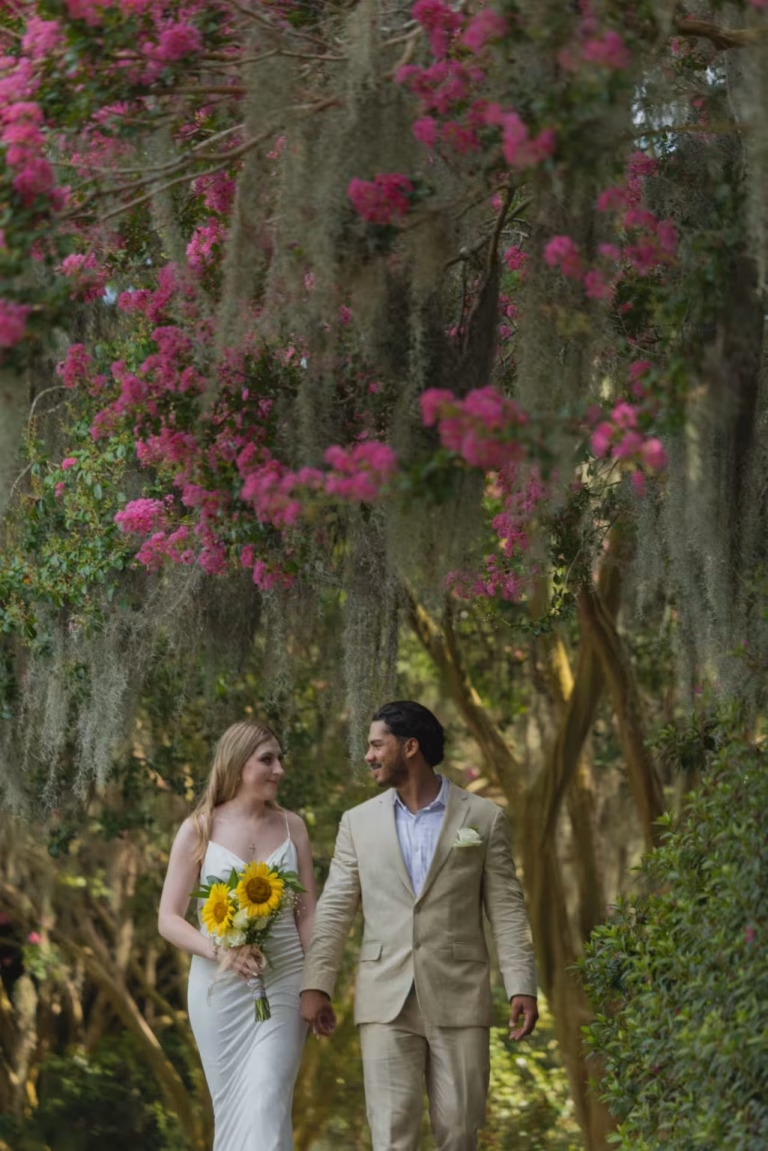
So a “courthouse wedding” in Charleston can look like this: the license in hand, a short ceremony with an officiant in a garden, a park, a hotel courtyard or a family living room, and the portraits close by.
Studio FB USA’s weddings page counts “a courthouse morning followed by a long lunch” among the kinds of weddings a single season brings.
Public parks and private gardens may set their own rules for ceremonies and for photography. Studio FB USA’s engagement page notes that some gardens and parks control photography with their own rules and fees, so ask the property or the city before the time is set.
Step 4: After the vows, the paperwork goes back
The license is issued in triplicate. Under Section 20-1-330, the person who performs the ceremony fills in the copies, gives one to the couple and returns the other two within fifteen days to the officer who issued them.
The probate judge then records the marriage and sends a copy to the state’s Division of Vital Statistics (Section 20-1-340).
Later, for a name change, a bank or an immigration file, a certified copy can be requested from the probate judge who issued the license, as the same section provides. Asking the officiant when the copies went back tells you when that request makes sense.
Photographing a wedding that lasts an hour
Studio FB USA’s notes on small weddings say coverage for them is measured in hours rather than a full day, with a simpler timeline and a short portrait session before or after the ceremony, somewhere with good light.
Couples who marry quietly now and plan a bigger celebration later often use those portraits for the announcement. Small, in the studio’s words, does not mean rushed.
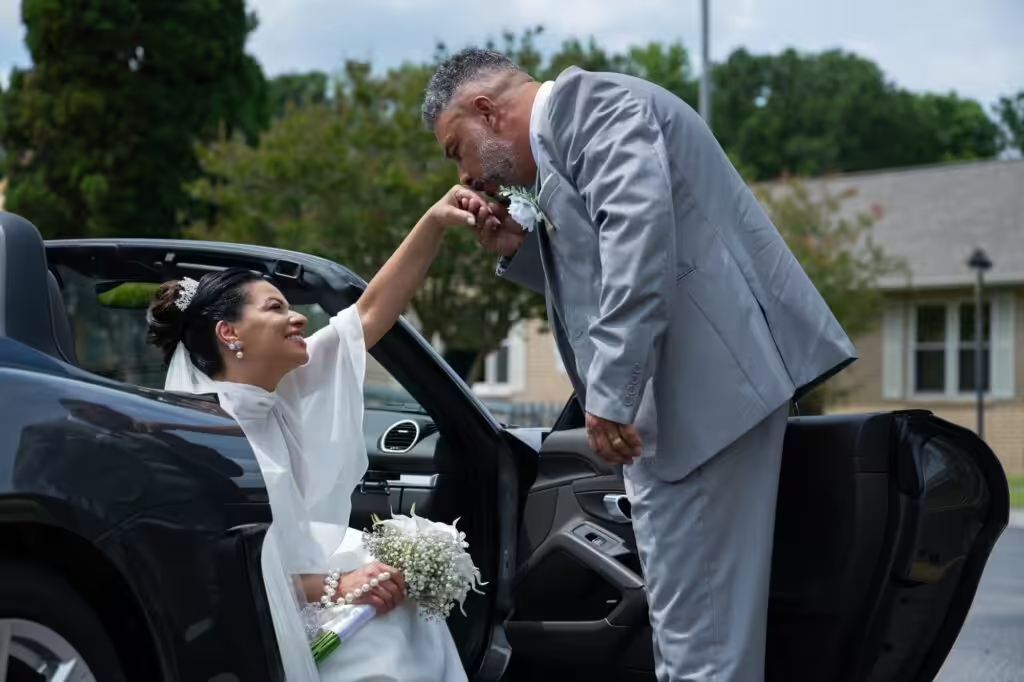
The hour after can be as simple as this frame from Thais’s wedding: a kiss on the hand at the car door as the two of them leave.
For a short day, a workable plan is the vows and the signatures, a few frames with everyone who came, and a short portrait walk before lunch. The studio’s guide to how many hours of wedding photography you need shows how a short day adds up.
Midday light downtown
When the license pickup and the vows both happen during office hours, the light downtown is high and hard. Look for open shade: the shaded side of a building, a deep porch or a canopy of live oaks in a nearby park, where faces stay soft.
The other option is to split the day. Say the vows at midday, have lunch, and meet the photographer again in the last hour before sunset, the light Studio FB USA plans couple portraits around, at a place that photographs well.
Can you marry the same day you apply?
Not in South Carolina. The 24-hour gap between filing the application and issuing the license is written into the law (Sections 20-1-220 and 20-1-230). Plan it as two steps: apply first, then collect the license and marry at least a day later, with the officiant and the photographer booked for the second day.
The printable checklist
Before the day
- File the written application together with the Charleston County Probate Court, with both Social Security numbers or alien identification numbers.
- Bring documentary proof of age if either of you is between 18 and 25, and the ID the court asks for.
- Wait at least 24 hours, then collect the license and pay the fee posted by the court.
- Book the officiant (a minister, a rabbi or a notary public) and confirm the date, time and place.
- Check the rules of the place: park, garden, restaurant courtyard or home.
- Book the photographer for the ceremony and a short portrait session in good light.
On the day
- Hand the license to the officiant before the ceremony starts.
- Vows, rings, signatures, and a few frames with everyone who came.
- Portraits in shade at midday, or in the last hour before sunset.
After
- The officiant returns two copies of the license to the issuing judge within fifteen days.
- Request a certified copy from the probate court when you need one.
Studio FB USA photographs small weddings in Charleston, Summerville and the Lowcountry, in English, Portuguese and Spanish. Send the date, the place and how many people will be there, and plan your courthouse wedding photos with Studio FB USA.