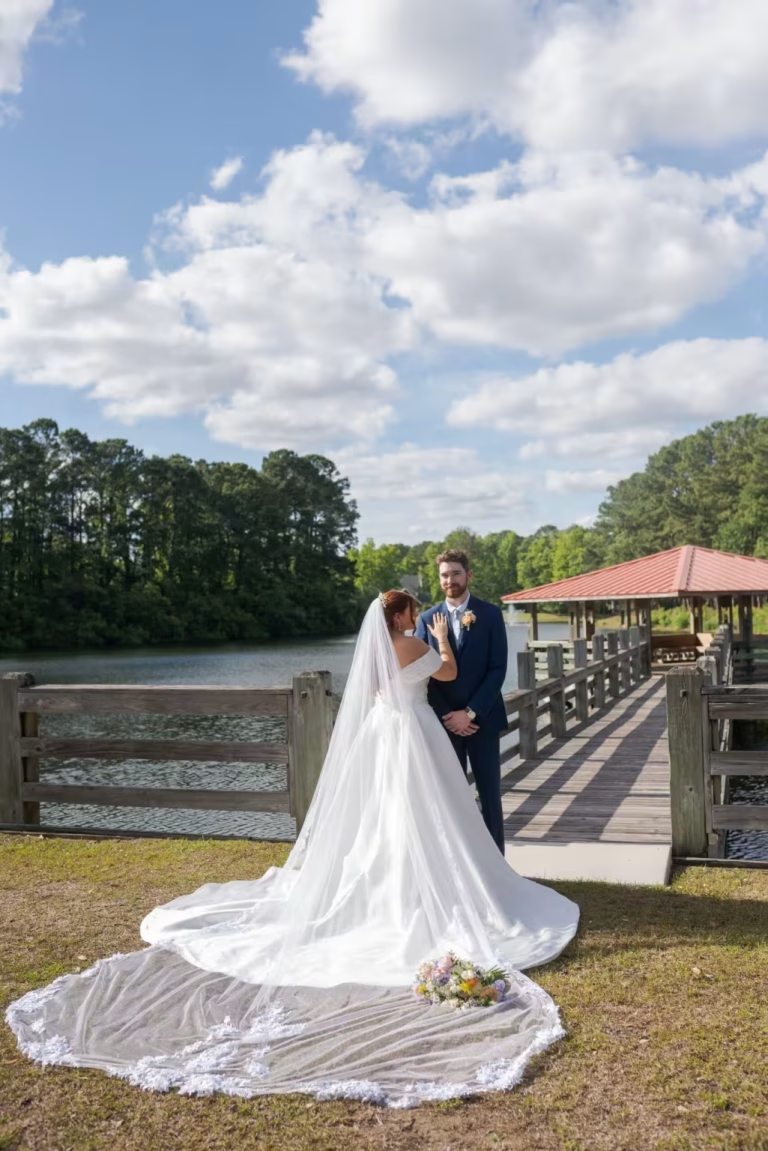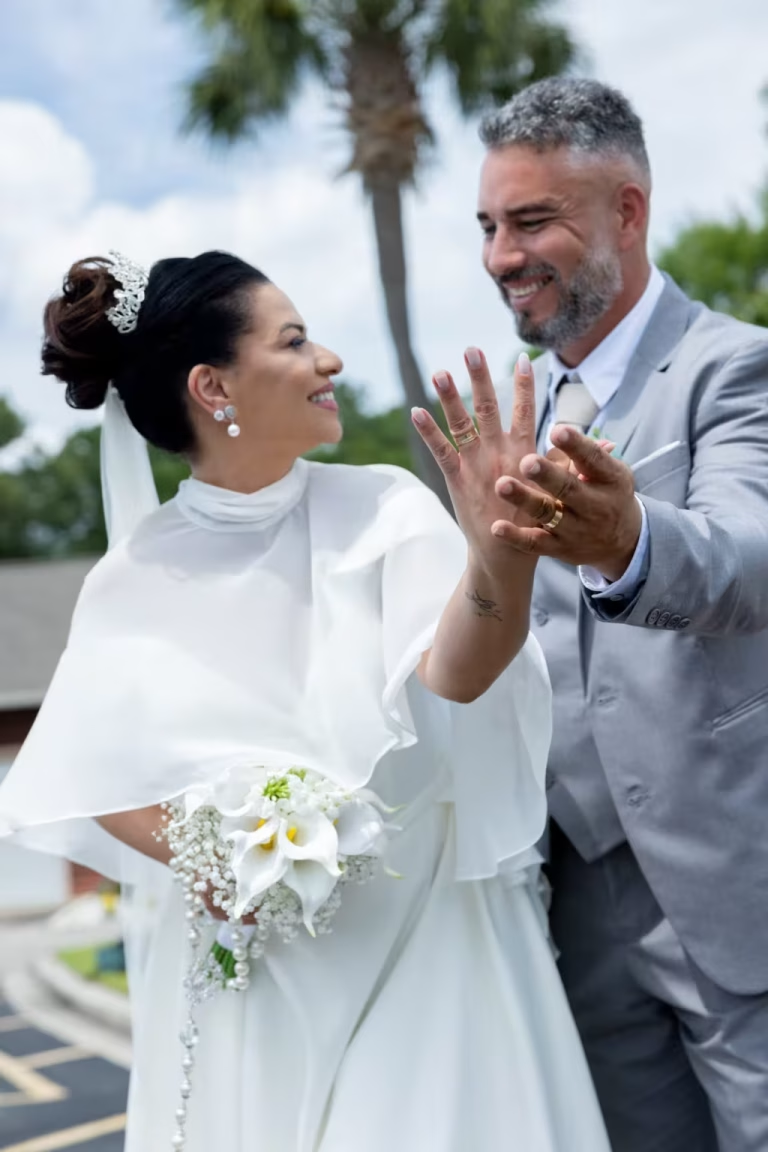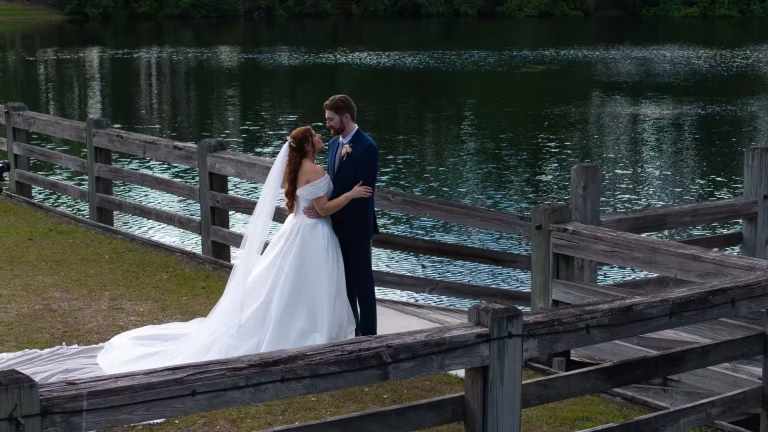


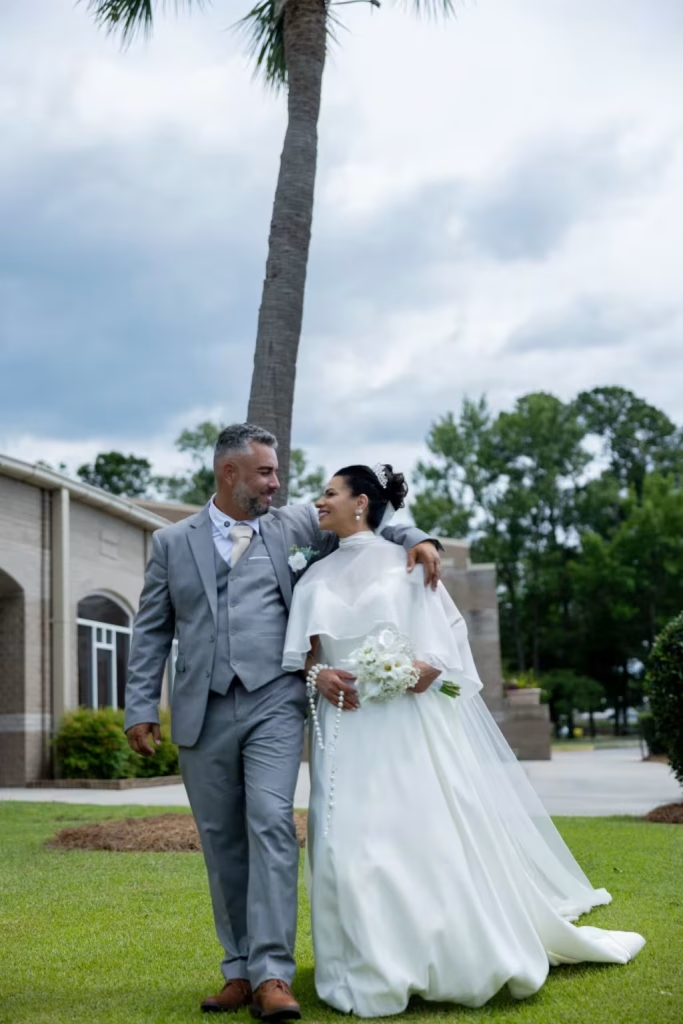
Couples tend to count photography hours the way they count the party, from the first song to the last. The camera keeps a different clock. It starts with the first moment you want remembered and stops with the last one, wherever those two moments happen to be, and the miles in between count too.
So the honest answer to “how many hours of wedding photography do I need?” is a calculation, not a package size: the span from the first moment you want photographed to the last, plus travel between places, plus a little slack.
A courthouse ceremony followed by a meal needs a few hours. A day with getting ready, a church ceremony in Summerville and a reception in downtown Charleston needs most of the afternoon and evening. The worksheet below turns your plan into a number.
The hours worksheet
Fill in the start and end of each block you want covered, using your venue’s schedule, and leave a row blank if it is not part of your day.
Coverage is the time from the start of your first row to the end of your last one, not the rows added together, because the gaps between blocks are paid hours too.
| Block | What it includes | Starts | Ends |
|---|---|---|---|
| 1. Getting ready | Often just the last hour: dress, jewelry, the parents seeing you | ____ | ____ |
| 2. Portraits before the ceremony (optional) | A first look, wedding party, or the two of you alone | ____ | ____ |
| 3. Travel | From where you get ready to the ceremony | ____ | ____ |
| 4. Ceremony | Arrival of guests through the recessional | ____ | ____ |
| 5. Family groups | Every group on your list, with names | ____ | ____ |
| 6. Travel | Ceremony to reception, if they are in different places | ____ | ____ |
| 7. Couple portraits | Ideally in the last hour before sunset on your date | ____ | ____ |
| 8. Reception moments | Entrance, toasts, first dance, cake, any tradition, the exit | ____ | ____ |
| 9. Slack | A buffer for a late start or a long group list | ____ | ____ |
Your coverage = end of the last block − start of the first block. Round up to the next half hour.
Filling it in for a Summerville church and a downtown reception
Our weddings page describes a day like this one: getting ready, a church ceremony in Summerville and a reception in downtown Charleston. Here it is on the worksheet for a Saturday in late April.
The times are placeholders to show the arithmetic; the sunset is real. On April 25, 2026, the U.S. Naval Observatory puts sunset in Summerville at 7:58 p.m.
| Block | Sample start | Sample end | Why it sits there |
|---|---|---|---|
| Getting ready, last hour | 3:30 p.m. | 4:30 p.m. | Dress on, parents’ first look at the bride |
| Travel to church | 4:30 p.m. | 4:45 p.m. | Same town |
| Ceremony | 5:00 p.m. | 5:45 p.m. | Set by the church |
| Family groups | 5:45 p.m. | 6:15 p.m. | Done at the church, while everyone is there |
| Drive downtown | 6:15 p.m. | 7:00 p.m. | Roughly forty minutes by I-26 between downtown and our Summerville studio, the estimate we give families, before Saturday traffic |
| Couple portraits | 7:00 p.m. | 7:45 p.m. | The last hour before the 7:58 p.m. sunset |
| Reception moments | 7:45 p.m. | 9:30 p.m. | Entrance, toasts, first dance, cake |
From 3:30 to 9:30 is six hours. Stay for an exit at 10:30 and it becomes seven. Keep that exit and also start getting-ready coverage at 2:30, and it is eight.
The same day in mid-October looks different: sunset in Summerville on October 17, 2026 is at 6:45 p.m., according to the same Naval Observatory data, so the portrait block moves before the drive, and the order of the whole afternoon changes with it.
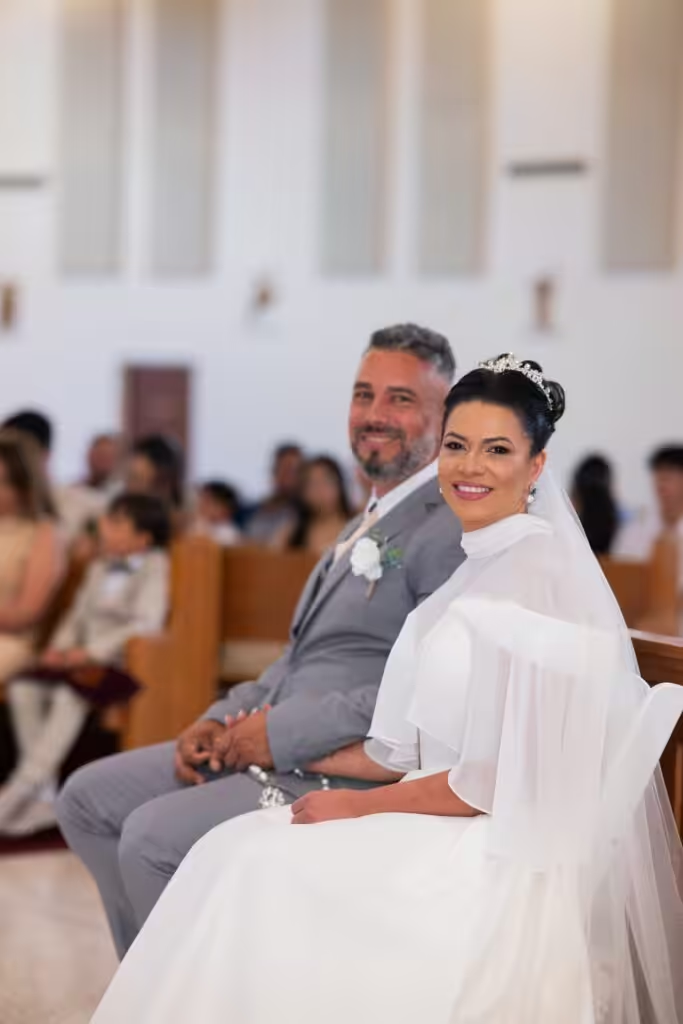
At Thais’s wedding, the ceremony took place in a church, where the order of service, and with it the length, is set with the officiant. Confirm that block first; everything after it hangs on it.
What adds hours
- Two locations. Every drive is covered time. A church in Summerville and a reception downtown add the trip and the loading at each end.
- A long family list. Each named group takes time to gather and arrange. A tight, well-ordered list, like the one in our wedding photo shot list, keeps this block short.
- Religious or cultural ceremonies. A full Mass or a ceremony with several traditions usually runs longer than a civil service.
- Late summer sunsets. Around the June solstice, sunset in Summerville comes close to 8:30 p.m. (8:32 p.m. on June 20, 2026, per the Naval Observatory), which can push portraits deep into the reception.
- A late exit. If the send-off is the last thing on your list, the coverage runs until the car leaves.
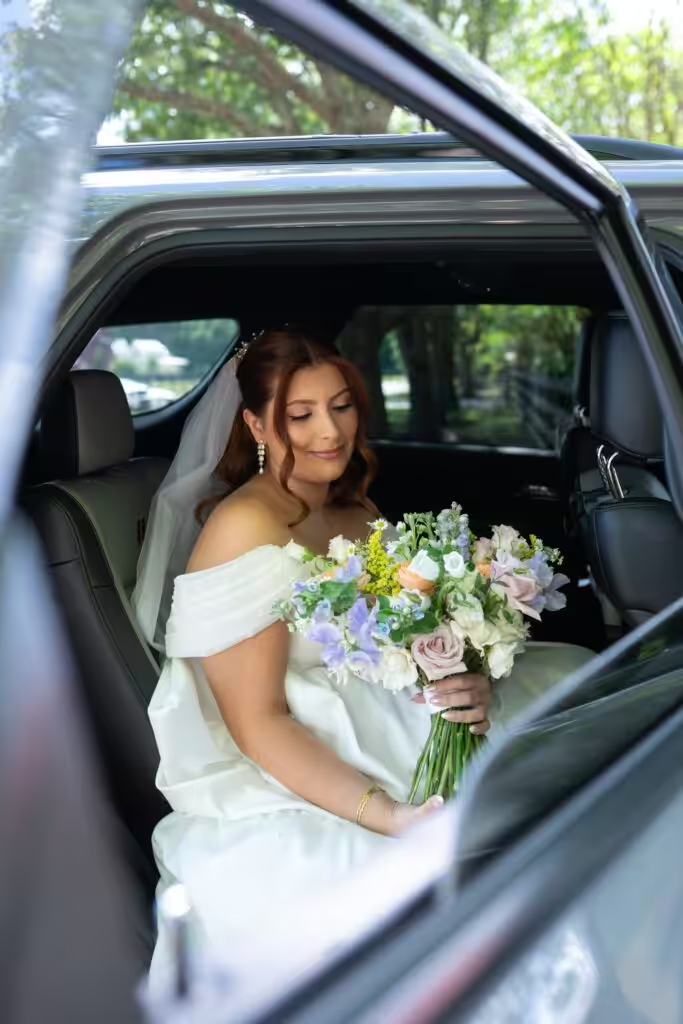
Car rides are part of the day’s story too: the moment a bride gets into the car can be the last quiet frame before a reception.
What you can trim without losing the story
If the worksheet comes out longer than you expected, cut from the edges, not the middle.
- Start with the final hour of getting ready instead of hair and makeup from the beginning.
- Do the family groups right after the ceremony, at the ceremony site, while everyone is still there.
- Stage the exit earlier in the evening for the camera, then party on without a photographer.
- Take the couple portraits before the ceremony, if you are comfortable seeing each other first; it closes the gap after the vows.
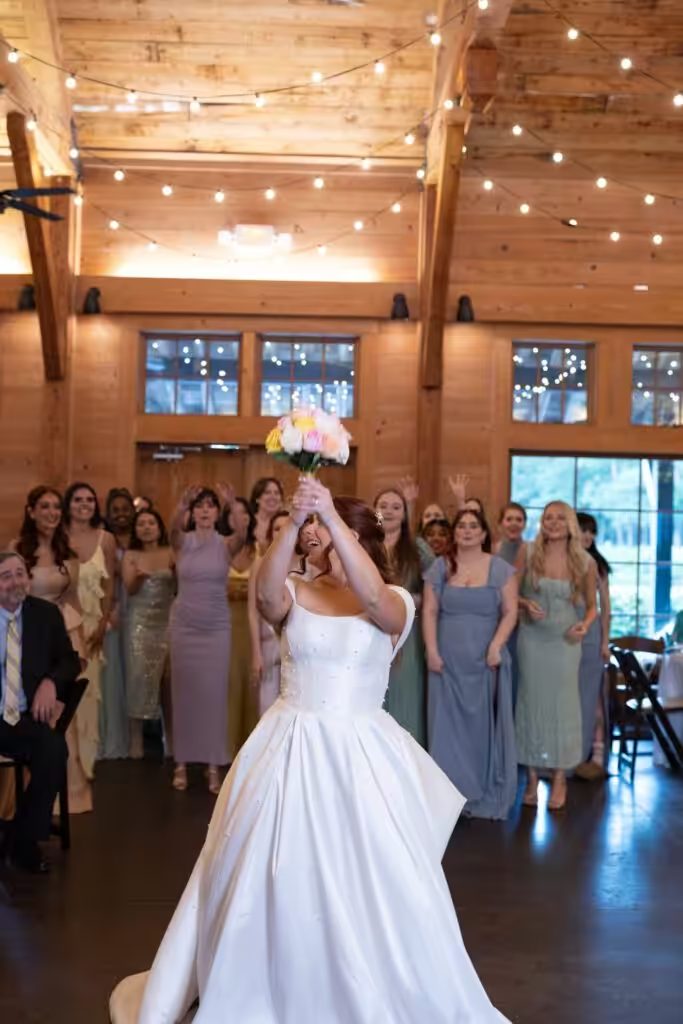
Group the reception moments you care about, such as the toasts, the first dance, the cake and the bouquet toss, into one stretch early in the evening, and coverage can end long before the music does.
Small weddings, elopements and courthouse mornings
A small wedding is measured in hours, not in a full day, and the worksheet shrinks to three or four rows: arrival, ceremony, a few family frames and a short portrait session somewhere with good light, before or after.
Our page on wedding photographer coverage in Summerville explains how coverage is planned for the day itself, whether that is an elopement or a Saturday split between two venues.
Couples who marry quietly now and plan a bigger celebration later often want those portraits for the announcement. A short day is not a hurried one; it just has fewer blocks.
Questions couples ask about coverage hours
How long do you have a wedding photographer for? For the hours you book, counted from arrival to departure. Ask whether driving between venues falls inside those hours, and whether extra time can be added on the day if the schedule slips.
Is it better to book too many hours or too few? Fill in the worksheet with your venue’s times before you decide. If the result lands between two options, round up rather than down: when time runs out, it runs out at the end of the night, where the toasts and the exit tend to sit.
Does a second photographer change the hours? It changes what can be covered at once, such as two people getting ready in different places, not how long the day lasts.
Taking the number to the first conversation
Bring the filled-in worksheet to your first call with any photographer. It answers the questions they will ask anyway, and it shows at once whether your day needs four hours or nine.
Studio FB USA builds coverage around the day rather than a fixed package, in English, Portuguese or Spanish. Send the worksheet, and ask Studio FB USA to cover your wedding day.