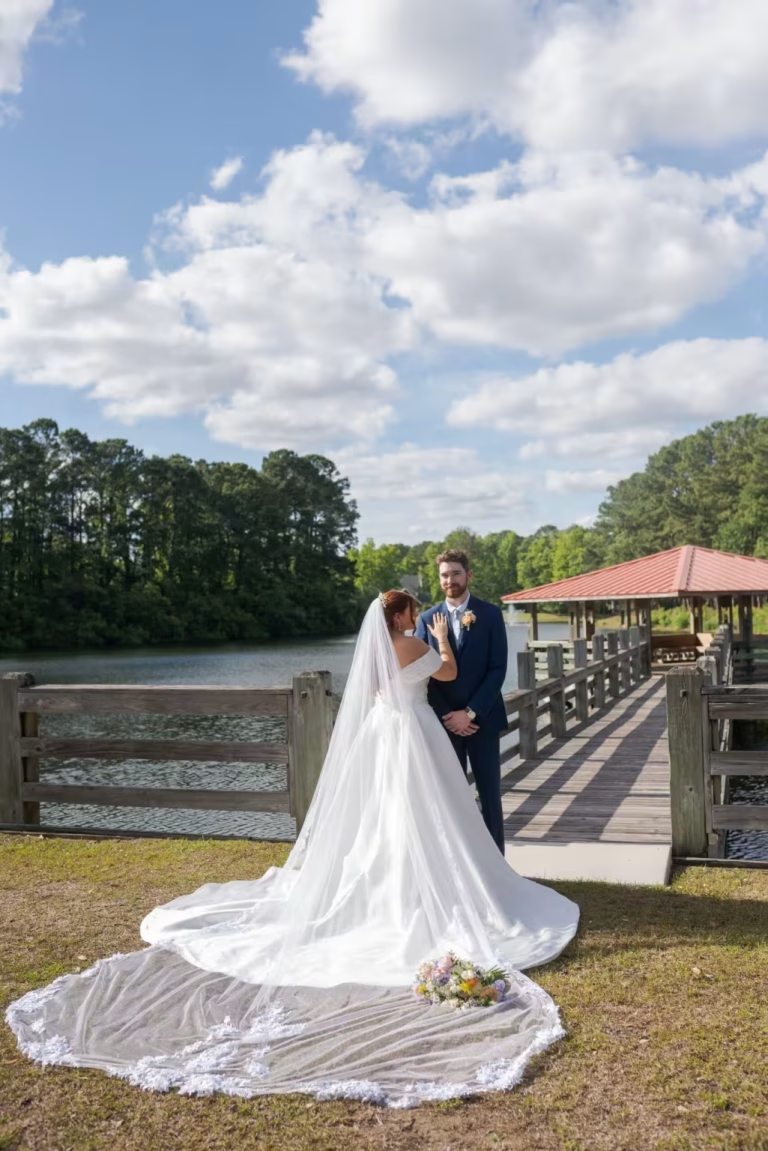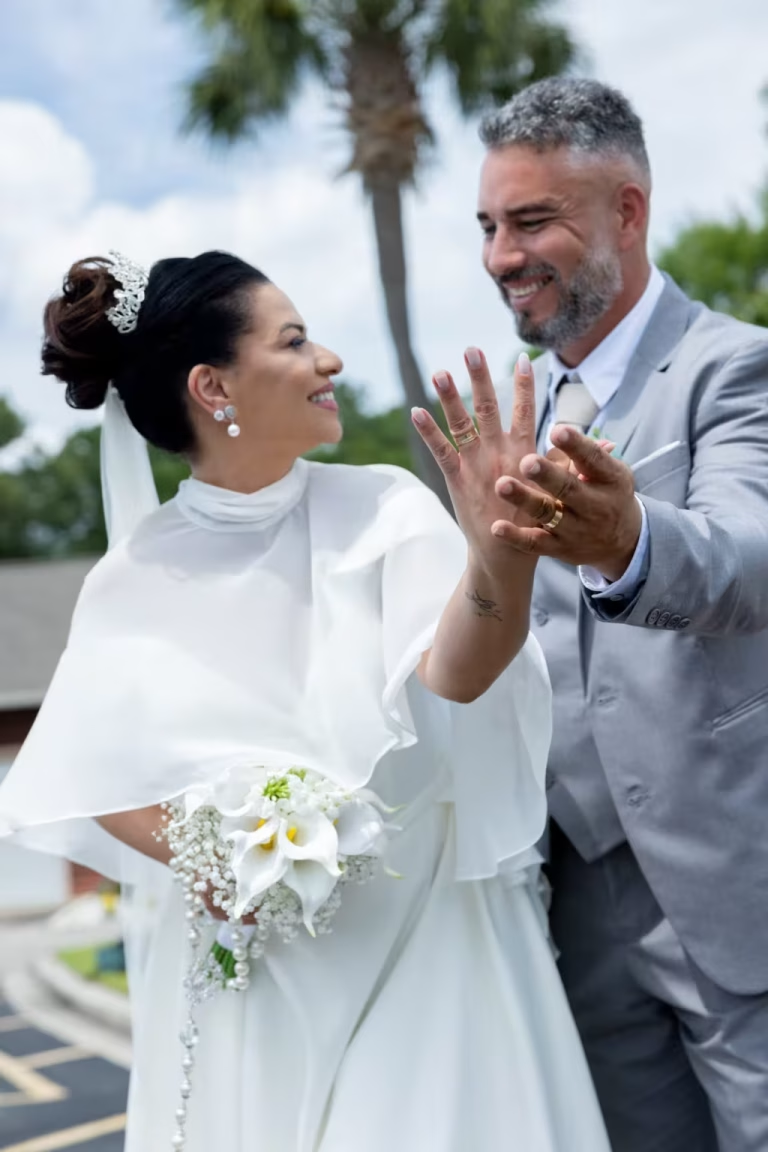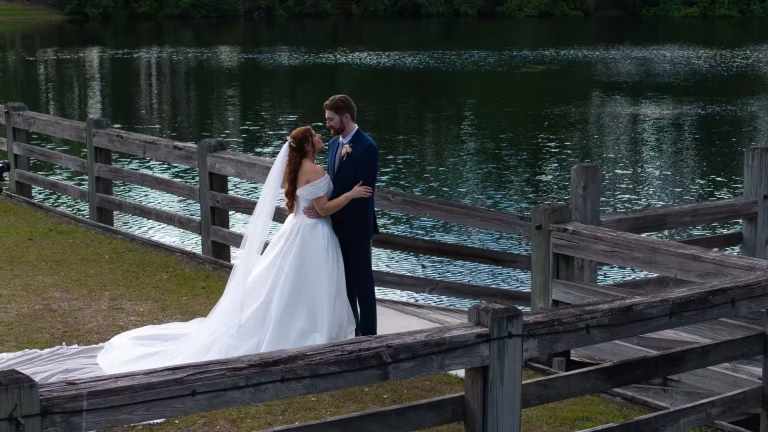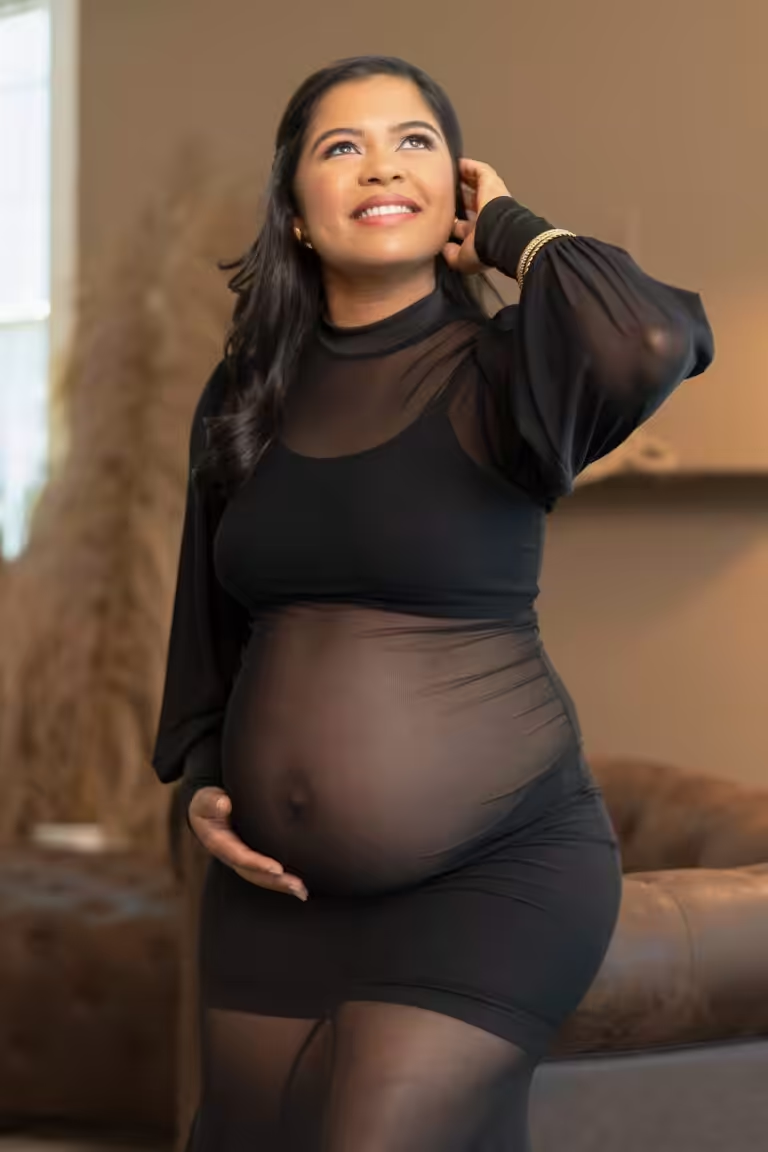

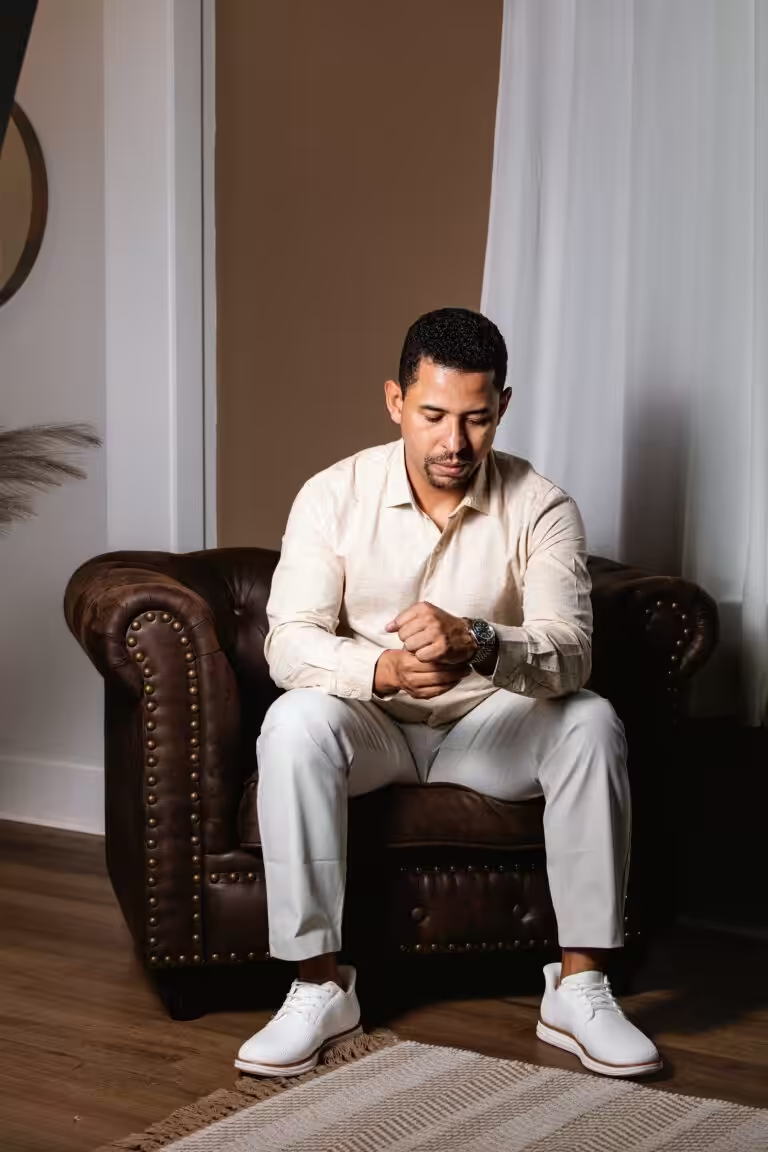
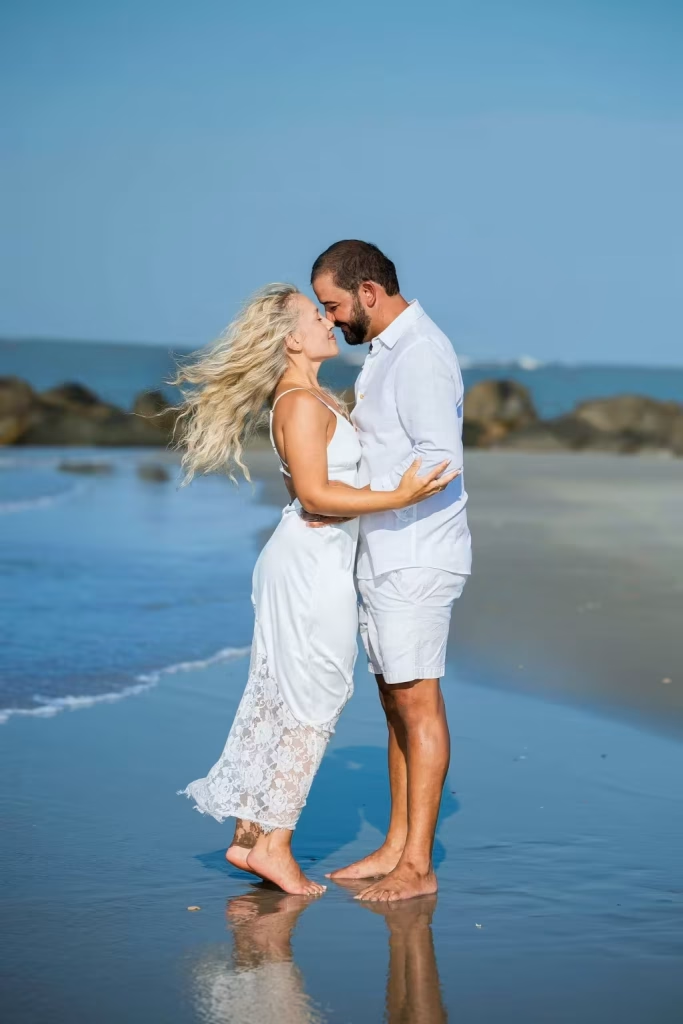
How to plan a proposal with a photographer comes down to four things you settle before the day: the spot, the minute, a signal only the two of you share, and where you and your partner will stand. Get those right and the photographer can catch the question and the answer without your partner noticing a camera.
In late fall, the minute matters more than people expect. Daylight saving time ends on the first Sunday of November, and by mid-month the sun sets in Summerville at about 5:19 p.m. A proposal planned around a 6:30 dinner reservation can end up happening in the dark. Plan around the light instead.
The four things to settle with your photographer
- The spot: a place that means something to you both and gives the photographer somewhere ordinary to stand.
- The minute: a start time worked backward from sunset, with a few minutes of slack for traffic.
- The signal: one small, natural gesture that tells the photographer “now.”
- The marks: where each of you stands, so your partner’s face turns toward the lens and the light falls on it.
At Studio FB USA, proposals are planned in advance with the person asking, and the arrangement stays confidential. On the day, the photographer blends into the setting until the moment happens. Everything below is about making those four choices well.
Decision 1: a true surprise, or a photo session as cover?
There are two ways to get a photographer to the right place, and the choice depends on your partner more than on you.
If your partner would hate being caught in a sweatshirt, book a couples’ photo session and propose partway through it. Your partner arrives dressed and relaxed, and the photographer can steer you both to the right spot without anyone wondering why. The risk is suspicion: a photo shoot that appears out of nowhere can give the game away.
If you want a reaction nobody saw coming, keep the photographer hidden. You bring your partner to the spot with a reason that fits your routine, such as a walk, a sunset drink or a visit to a place you both like, and the photographer is already there looking like any other visitor.
The trade-off is that you cannot talk to each other on the day, so the plan has to be settled in advance.
If your families speak different languages and some of them will be part of the moment, say so early. Planning at the studio can happen in English, Portuguese or Spanish.
If you would rather not hire a photographer, ask one trusted friend to be the camera. Give them the same plan you would give a professional: the mark, the signal and the minute. Have them shoot video on a phone braced against something solid and pull stills from it later.
Keep it to one friend. Three people loitering with phones will give the secret away.
Decision 2: choose a spot where a photographer can disappear
A good proposal spot has three things: meaning for the two of you, a place where a person with a camera looks normal, and light that will fall on your partner’s face rather than behind it.
In Summerville, Azalea Park can work on all three counts. Its walking paths pass a pond, a gazebo and sculptures, so someone standing on the path with a camera reads as a visitor, not a lookout.
The historic downtown around Hutchinson Square is busier, which suits couples who don’t mind an audience or who can go early on a weekday. The studio lists both among its engagement locations, alongside Shem Creek and the beaches at Sullivan’s Island and Isle of Palms near Mount Pleasant, and the Battery in downtown Charleston.
You can read more in the notes from Alessandra’s engagement session, which include a section on proposal photography.
One check before you fall in love with a place: several gardens, parks and plantation properties set their own rules and fees for photography. Ask the photographer to confirm what the location requires before it goes into the plan, not on the day.
Decision 3: set the time by the sunset, not by dinner
Outdoors in the Lowcountry, the light worth planning around is the last hour before sunset. Aim to propose 30 to 50 minutes before the sun goes down. That leaves time for the moment, a few minutes alone, and a short portrait session while the light is still warm.
Sunset moves a lot across the year here, and the clock change in November moves it again. These are the times for Summerville on the 15th of each month, from the U.S. Naval Observatory.
| Month (15th) | Sunset | End of civil twilight | Propose around |
|---|---|---|---|
| January | 5:37 p.m. | 6:04 p.m. | 4:50 p.m. |
| February | 6:06 p.m. | 6:31 p.m. | 5:20 p.m. |
| March | 7:29 p.m. | 7:53 p.m. | 6:40 p.m. |
| April | 7:51 p.m. | 8:17 p.m. | 7:05 p.m. |
| May | 8:13 p.m. | 8:41 p.m. | 7:25 p.m. |
| June | 8:31 p.m. | 9:00 p.m. | 7:45 p.m. |
| July | 8:30 p.m. | 8:58 p.m. | 7:45 p.m. |
| August | 8:06 p.m. | 8:32 p.m. | 7:20 p.m. |
| September | 7:26 p.m. | 7:51 p.m. | 6:40 p.m. |
| October | 6:47 p.m. | 7:12 p.m. | 6:00 p.m. |
| November | 5:19 p.m. | 5:45 p.m. | 4:30 p.m. |
| December | 5:16 p.m. | 5:43 p.m. | 4:30 p.m. |
Times are local. The March through October dates fall on daylight saving time, which runs from the second Sunday of March to the first Sunday of November (USNO sun and moon data, Summerville coordinates). Civil twilight is the glow after sunset; once it ends, outdoor portraits need added light. The “propose around” column is our planning suggestion, not a rule.
Daylight saving time ends at 2 a.m. on the first Sunday of November (NIST). Between October 15 and November 15, sunset moves almost an hour and a half earlier on the clock, so a time that worked for a friend’s October proposal will not work for yours.
Decision 4: agree on the signal and the marks
The signal should be something you would do anyway: putting on sunglasses, taking off a cap, sending a one-word text. Avoid anything that makes your partner turn around to see what you are looking at.
Then agree on the marks. Your partner should end up facing the photographer, with the light on their face, while you kneel or stand with your side toward the camera. A photographer who plans proposals will work out where your partner should stand so the light and the background cooperate, and will tell you which way to walk in.
Send the photographer a recent photo of the two of you and a description of what you will both wear. On a busy path, that is how they find you in the first second.
Decision 5: have a plan for rain, crowds and running late
Weather is the first thing to plan for. November is the driest month of the year on average at Charleston’s airport, with 2.66 inches of rain in the 1991–2020 normals from NOAA.
The summer months bring afternoon storms that can wash out a location in minutes. Pick a backup day, or a backup hour on the same day, when you book.
Crowds come next. Downtown spots are quieter early in the day and midweek. If the place is packed when you arrive, the photographer can wave you to a second, nearby mark you agreed on in advance.
For running late, agree on a code word by text. The photographer holds the spot and adjusts the plan; you do not have to explain anything in front of your partner. If the sky refuses to cooperate for the portraits afterward, the studio in Summerville is the fallback for the engagement photos.
Right after the yes
Give yourselves a few minutes. The pattern described in the studio’s own notes is a simple one: after the proposal, the couple has a moment to take in the news, and then the photographer runs a short engagement session while the emotion is still on their faces.
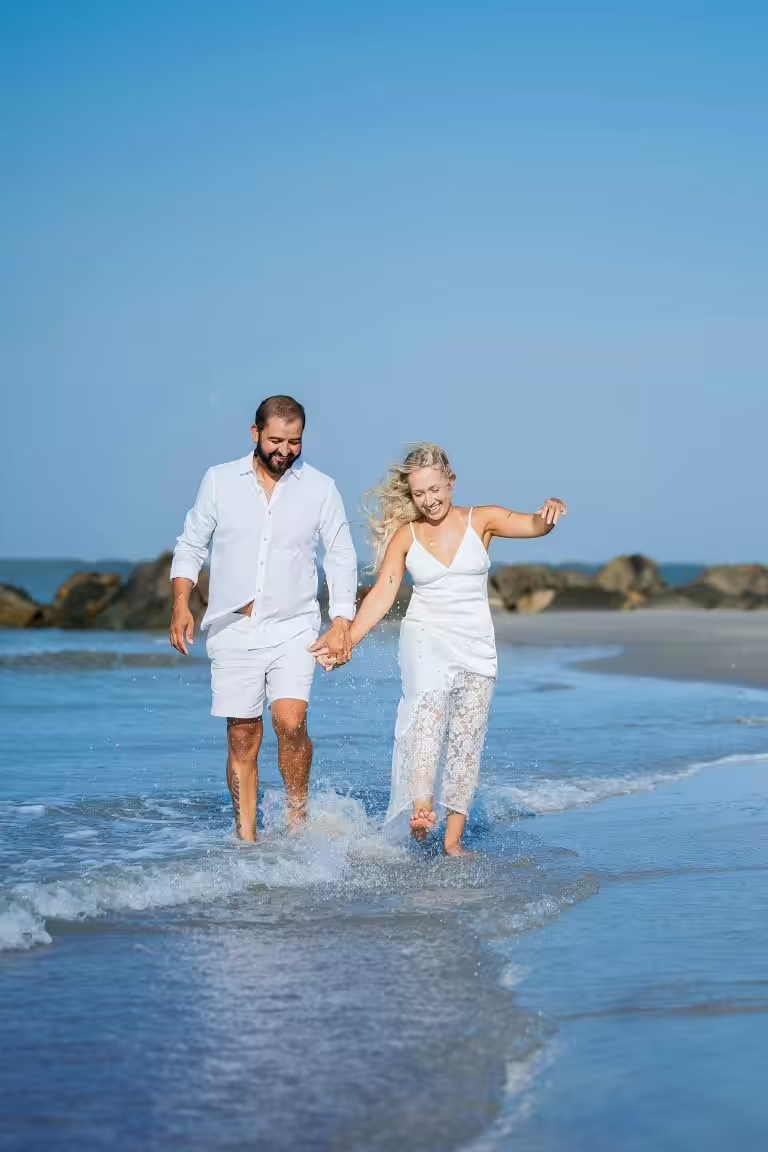
Those first portraits are the ones you will use to tell everyone, so a few close frames of the ring are worth taking. Keep it to a few.
A gallery where the ring is in every picture is less useful than one where it appears in three or four and the rest is about the two of you. Save the calls to family for after the portraits; by then the light is gone anyway.
When you are ready to plan the next session, here is how engagement photos in Charleston work with the studio, from the save-the-date frames to the wedding website.
A mid-November evening, minute by minute
Here is how a plan looks on November 15, with sunset at 5:19 p.m. and civil twilight ending at 5:45 p.m.
- 3:45 p.m. The photographer arrives, checks where the light falls and takes test frames at both marks.
- 4:15 p.m. You arrive with your partner, using the cover you chose.
- 4:30 p.m. You reach the mark and give the signal. About 50 minutes of daylight are left.
- 4:35 p.m. A few minutes for the two of you. The photographer keeps a distance.
- 4:45 to 5:20 p.m. Short portrait session, ring details, and the last frames against the sky as the sun drops.
- 5:45 p.m. Twilight is over. Time to call the families.
Shift every line by the sunset time for your date, and add ten minutes of slack if you are driving through traffic on a weekday.
What the cost depends on
People often ask what a proposal photographer charges. The answer depends on how long the photographer stays, whether a portrait session follows the proposal, where the location is and how far it is to travel, how many edited images you receive, and whether you want prints. A quote for your plan is the reliable number.
To start, send the date you have in mind and the spot you are considering through the contact form, or call or text (843) 727-5264. Then plan your proposal photos with Studio FB USA and the rest gets worked out with you, in confidence.