




A Magnolia Plantation photoshoot is a portrait session in the gardens of Magnolia Plantation and Gardens, on the Ashley River west of Charleston, planned around the garden’s own photography rules. It deserves planning in March above all, when the azaleas bring the crowds and the garden’s visiting hours, not the sunset, decide when you can photograph.
In short: a session with a hired photographer goes through Magnolia’s photo shoot package, the photographer counts as one of the four people it allows, and for most of the year the light you get is daytime light, because visitors leave long before sunset.
What Magnolia’s photo shoot package covers
Magnolia sells a photo shoot package on its photo shoots and proposals page. According to that page, it includes full-day access to the property for up to four people in total, and your independent photographer counts as one of the four. Magnolia does not provide the photographer; you bring your own.
Booking goes through the garden’s sales team, and the fee is posted on the same page. It is not repeated here because prices change; the current one is on Magnolia’s photo shoots and proposals page.
Personal photography is a different case. The garden’s FAQ says personal photos are allowed and encouraged for regular visitors. If a hired photographer is part of the plan, ask the sales team which option fits your group before you buy tickets.
Four people is a tight number. A couple and a photographer leave one place, for a friend, a parent or someone to hold the bouquet. A family of four plus a photographer is already one over, so a larger group needs a conversation with Magnolia first.
The garden’s day ends before golden hour, most of the year
Most outdoor portrait advice says to photograph in the last hour before sunset. At Magnolia, that hour usually arrives after the property has emptied. The garden publishes its hours on a daily schedule page, and its FAQ asks visitors to be off the premises by 5 p.m.
The sun keeps its own schedule. In mid-March it sets at about 7:28 p.m. at the gardens, roughly two and a half hours after visitors must leave, according to U.S. Naval Observatory data.
By mid-June the gap is about three and a half hours. From November through January, sunset falls within forty minutes of the 5 p.m. leave-by time.
Does “full-day access” in the photo shoot package reach past the regular hours? The page does not say, so ask about the hours when you book. If the answer is no, plan the session for daytime light, as described further down.
Month by month: blooms and sunset at Magnolia
Magnolia keeps a month-by-month bloom journal compiled by its horticulture team, and says something is in bloom every day of the year. The table pairs a few plants from each month’s list with the sunset time at the gardens in the middle of that month.
| Month | In bloom, from Magnolia’s journal | Sunset at the gardens (15th) | Sunset after the 5 p.m. leave-by |
|---|---|---|---|
| January | Flowering apricot, winter honeysuckle, pansies | 5:37 p.m. | 37 minutes |
| February | Camellias, the first Indica azaleas, daffodils, Okame cherry, star and saucer magnolias | 6:06 p.m. | About 1 hour |
| March | Indica and spider azaleas, daffodils, Cherokee rose, snowball viburnum, red buckeye | 7:28 p.m. | About 2½ hours |
| April | Azaleas, Louisiana iris, Blush Noisette roses, amaryllis | 7:51 p.m. | Almost 3 hours |
| May | Mophead and panicle hydrangeas, Shasta daisies, verbena | 8:13 p.m. | Over 3 hours |
| June | Hydrangeas, ginger lilies, chaste tree | 8:30 p.m. | About 3½ hours |
| September | Crinum and ginger lilies, abelia, candy corn plant | 7:26 p.m. | About 2½ hours |
| October | Swamp sunflower, purple velvet sage, spotted beebalm, butterfly bush | 6:47 p.m. | Almost 2 hours |
| November | Swamp sunflower, salvia, beebalm, tea hibiscus | 5:19 p.m. | 19 minutes |
| December | Butterfly bush, abelia, salvia, Blush Noisette roses | 5:15 p.m. | 15 minutes |
Plants are from Magnolia’s what’s in bloom pages; sunset times are U.S. Naval Observatory figures for the gardens’ location on the 15th of each month of 2026, in local time. July and August are left out: the lists look much like June’s, and midsummer heat is hard on everyone in the frame.
The pattern is plain. Spring, the season most people picture, has the widest gap between the garden’s hours and the sunset. Winter is the reverse: a shorter list of blooms, but the low, warm light of late afternoon arrives while you are still allowed on the grounds.
Light to plan around instead: open shade, morning and overcast days
Daytime is not a problem if the session is built for it. Live oaks and dense planting create open shade, the even light under a canopy where faces stay soft and nobody squints. Shade also keeps the pinks of azaleas from washing out the way they do in direct sun.
Two other windows help: the first hour after the gates open, before the paths fill (the FAQ tells visitors to arrive early in the busy spring season), and overcast days, which turn the whole garden into one large soft light. Magnolia is open rain or shine, so a gray morning is still a working morning.
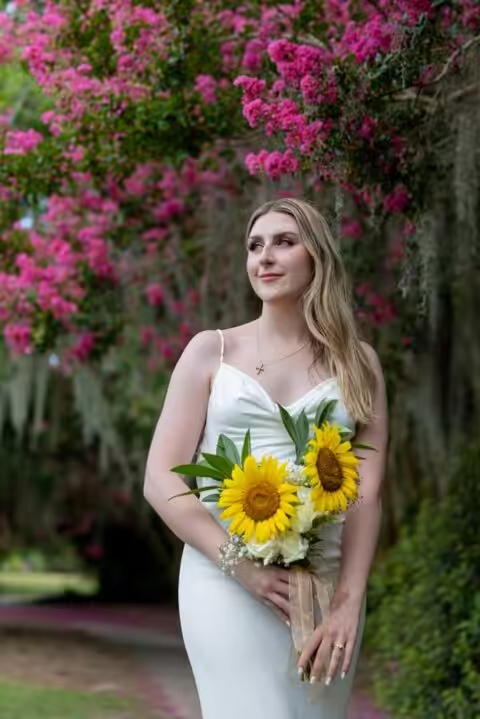
This frame is not from Magnolia. It comes from one of our engagement sessions in a different setting, and it shows what open shade under moss and blossoms does: soft light on the face, color behind her, and no direct sun anywhere in the picture.
Spots inside the gardens and what they ask of you
Magnolia’s own pages name its best-known backdrops: the white bridge, which the garden calls the Long White Bridge, and the moss-draped oaks. Admission also includes the Audubon Swamp Garden and walking trails across more than 200 acres, according to the FAQ, and the banks of the Ashley River open up a wide horizon.
That size is the catch. The FAQ suggests three to four hours just to enjoy the gardens and a couple of tours, so a portrait session works better with two or three spots close together than with a tour of the whole property.
The paths are dirt and gravel, and some are uneven, as the FAQ warns. Walk between spots in flat shoes and change into the pair you want in the photos at each stop.
Proposals at Magnolia
The same page sells proposal packages: property access during normal operating hours for up to four people, with your independent photographer counted among them, and a guided historic walking tour that ends at the Long White Bridge, where the question is asked. Add-ons such as a picnic with a view of the Ashley River are listed there too.
The four-person limit shapes a proposal more than any session: the person asking, the person being asked, the photographer and one more. In a garden this large, agreeing in advance where the photographer waits and what the signal is matters even more; the steps are in our guide to planning a proposal with a photographer.
Dogs, bugs, rain and shoes
- Leashed dogs are welcome in the gardens and the Audubon Swamp Garden, on a leash no longer than 6 feet, but not on tours, according to the FAQ.
- Bug spray is highly recommended. The property sits on the river among wetlands, swamps and ponds, and insects are part of the place in the warmer months.
- The garden stays open in rain, and tickets are not refunded for weather unless Magnolia itself closes. Keep a backup date in mind.
- Strollers and wheelchairs are welcome on the grounds, though the unpaved paths can be bumpy.
A place that tells a hard history
Magnolia’s history page says the Drayton family’s wealth came from Carolina Gold rice cultivated by enslaved people, and that the gardens themselves were built by enslaved labor. Four restored cabins where enslaved people lived still stand on the property, and the “From Slavery to Freedom” tour tells their story.
Plan the portraits in the gardens, on the bridges and by the river, and visit the cabins as a memorial, not a backdrop.
Before the date goes on the calendar
Our engagement page notes that plantation gardens and some parks control photography under their own rules and fees, and that we confirm what a location requires before it goes on the plan, so nothing has to be sorted out at the gate.
For March and April, a weekday morning and a backup date work best. For a sunset look, choose November through January, or pair a morning at Magnolia with a second location for the last light; more ways to combine settings are in our engagement photo ideas.
When a month is in mind, send the date, who will be in the photos and whether it is an engagement, a proposal or a family portrait. See how a Charleston engagement session works with us, then plan your garden session with Studio FB USA.